Less generation, more judgment: How Foreign Policy approaches design in the AI era
Yah-Leng Yu shares how AI has changed the studio's process and what designers should learn to stay relevant in the coming years.
Foreign Policy is an award-winning strategy and design office based in Singapore. Over the past 20 years, the studio has gone through multiple technological and industry shifts while remaining independent throughout.
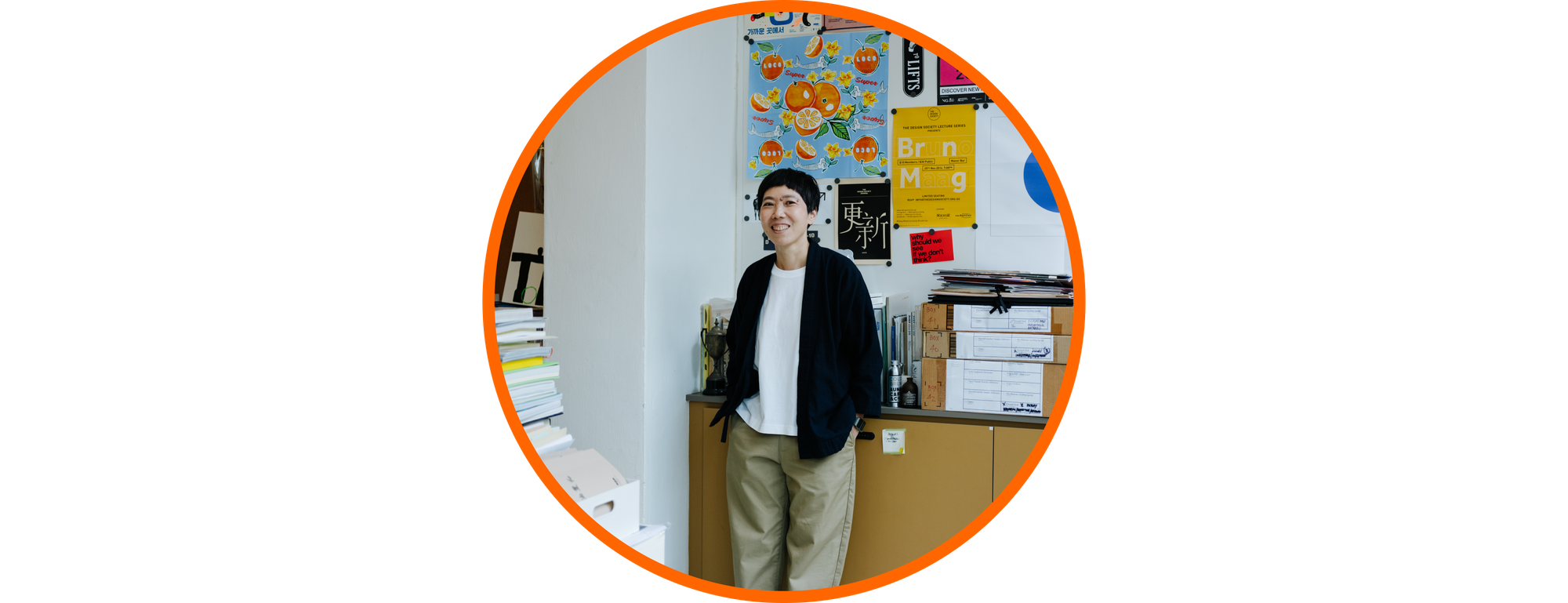
Yah-Leng Yu, Foreign Policy’s founding partner and creative director, shares below how AI has changed their process, what designers should learn to stay relevant in the coming years, and why offline gatherings are still one of the most valuable things you can do.
AI in the workflow
AI has changed the rhythm more than the work itself. The early phase of a project feels completely different now. Research, naming, copy directions, social media planning—things that used to take days, or require another person in the room, now compress into one brain, one day. That’s the real shift: not replacement, but compression.
During a recent hotel rebrand—a multi-property group across Thailand—AI helped us move fast through the language layer: brand voice, pitch deck copy, quick edits across a lot of documents. Social content planning that would’ve taken two days became an afternoon. It also gave us something we didn’t expect to lean on as much: quick draft visuals we could put on the table as conversation starters with the client. Not finished work, not even close, but enough of a direction to react to, argue with, push against. That friction is actually useful. It gets the room moving faster.
We work with Claude, ChatGPT, image generators like Nano Banana, tools inside Adobe Suite, things like that. Nothing exotic, and nothing that’s replaced a role. But nothing comes out straight, ever. The AI draft is a starting point, not a finish line. If you can’t edit it, you can’t use it. You still need the eye, the judgment, the ability to tell when something’s off. The brains are still very much required, they’re just doing different work now. It’s less generation, and more knowing what’s wrong.
The thing I watch for is the polish problem. AI-assisted work looks finished way earlier than it actually is. A half-baked idea can look convincing on screen before anyone’s properly interrogated it. We’ve had to stay more disciplined about not falling in love too soon.
The edit is still ours, though, and that’s the part that matters.
Will AI replace designers?
The anxiety is real, but I think it’s pointed at the wrong thing. Early-career designers aren’t being replaced by AI, they’re being replaced by designers who know how to think. That’s always been true, but AI just makes the gap visible faster.
Your job was never just to make things look good—it was to understand why something needs to exist, who it’s for, what it’s doing in the world, and then make it. AI can generate a hundred visual directions before lunch, but it can’t tell you which one is right for this client, this culture, this moment. That judgment is what you should be building.
At Foreign Policy, we’ve always said design is a business system. Designers who only know tools are perpetually anxious. The ones who know how to ask the right questions are fine, they’ve always been fine. Build the thinking, because the tools will keep changing anyway. AI is just a tool, designers who know how to think and edit will do well.
Readymag in the current stack
For us, Readymag is the presentation and publication layer where the work goes to be seen, not just delivered. There’s a real difference between a PDF deck and something that lives on the screen the way a Readymag website does. When we were working on Out of Office, having that editorial quality—the pacing, the typography control, the way content unfolds—made the work feel considered, like we actually meant it.
Internal prototyping lives in Figma. But for anything that needs to communicate with the quality of a well-designed magazine page—whether it’s a brand narrative, a festival identity, a small restaurant website, or a concept presentation where the medium should reinforce the message—Readymag earns its place.
Website of the Tiny Awards, made by Foreign Policy in Readymag
What I also appreciate is that it’s genuinely built for designers. You don’t need to know how to code to put out something that looks and feels considered. The interface gets out of your way and lets you design, which sounds basic, but a lot of tools don’t actually do that. For a studio like ours, that matters. We want to spend our time on the work, not the workaround.
Clients notice this. They may not know exactly why the presentation feels different, but they feel it. It’s not dry, it’s not a predictable website, and that’s the point.
Go big, go offline
Gathering design and creative minds has always been something we’re passionate about—it’s almost a compulsion at this point. During COVID, we organized Design Diplomacy, an online platform we launched to bridge Asian designers with global audiences. We were going live at 6PM or 9PM Singapore time to match Europe and US time zones every day, tech issues and all, but we pulled it off. It was a little wild, but really meaningful.
When things opened up post-COVID, we thought: okay, we’ve done the online version, so why not go properly physical? Why not go big? Around the same time, we were getting invitations to go give talks in Jakarta, and rather than just go and talk, we thought: why don’t we bring our friends and our design idols there instead? Let’s make something real happen. So we partnered with MANUAL, an amazing Jakarta-based creative media company who knew the local scene deeply, and we put together Out of Office—a two-day design conference celebrating visual design, branding, and creativity, with talks, portfolio reviews, and a design market—the works.
Website of the Out of Office festival
We didn’t talk at it: we organized the whole damn thing. Over 500 people came through: designers, creatives, and people who just came for the merch and ended up staying for the talks. The feedback genuinely moved us. People said we opened their eyes, that nothing like this had existed at that scale in Jakarta before. That made every sleepless planning night worth it. It was the first one, but definitely not the last.
From Singapore to the US and back
I was born in Singapore but left early—art school in Boston, then Los Angeles for a bit, then New York City, where I spent the bulk of my career working on digital and branding for luxury fashion clients. Versace, Bvlgari, Vivienne Westwood, Oscar de la Renta, Ferragamo—that whole world. It was incredible training. By 2006, Arthur [Chin, Foreign Policy’s co-founder] and I had been talking about starting something of our own, and it felt like the right time to come home. Singapore made sense for family, for roots, and honestly, for opportunity. The city was picking up steam.
The scene differences are real, though. New York is massive. A studio there can just do one thing—say, digital design for fashion—and that’s enough to stay busy and financially healthy for years. Singapore is a much smaller pond. You learn to be versatile fast. Early on, we’d benchmark everything to US scales and get a rude awakening. I remember a client proudly announcing a “huge” print run of 2,000 copies, and Arthur and I nearly fell off our chairs. In New York, 60,000 was standard, but what Singapore lacks in scale, it makes up for in connectivity. It’s an incredibly accessible city—you can reach anywhere in Asia quickly, and a lot of interesting businesses pass through or set up here. That keeps things exciting. And the design community, while smaller, is genuinely tight-knit and hungry.