Why is contemporary design asking for our participation?
More designers are creating experiences that invite audiences to explore, influence, and contribute. What does that shift reveal about design today?
For years, designers were guided by a clear goal: make experiences faster, smoother, and easier to navigate while creating brands and systems that were largely presented to audiences rather than molded by them. Yet across branding, packaging, and web design, a different approach is emerging—one that asks people to explore, interact, customize, contribute, and participate.
But what happens when designers stop optimizing solely for efficiency and start designing for involvement? Why are brands increasingly inviting audiences to shape their visual world? And what value does participation offer?
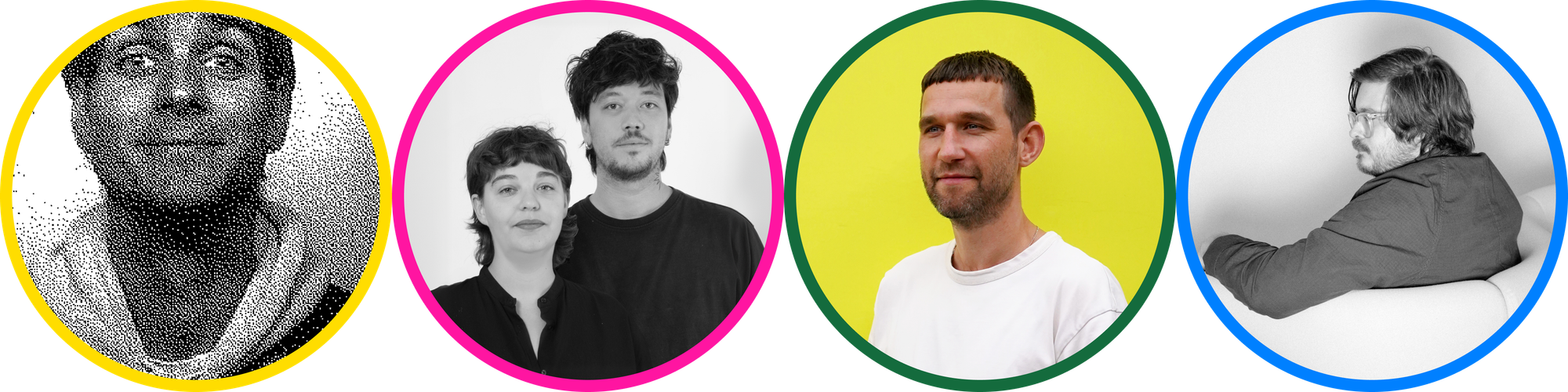
To unpack these questions, we spoke with Alright Studio, NOT Wieden+Kennedy, Land of Plenty, and mirat-masson about the role participation plays in their work and why some of today’s most memorable experiences are asking a little more of us.
Participation as experience
As the web grew more polished and optimized for clarity, clicks, and conversions, some of its capacity to surprise was lost along the way. Yet, pockets of the internet continue to resist. On the website for Motion Sickness, a New Zealand-based creative agency, visitors are encouraged to stack rocks before they can view the work. Meanwhile, on the website for Mother—the independent creative company whose digital home was designed by Alright Studio—there’s no single path through the experience.
Each of Mother's offices gets its own version of the website that can be customized locally
The site unfolds as the ‘Motherverse’: a digital world inspired by the company’s culture, mythology, and many interconnected parts. Visitors move between draggable windows, quizzes, chats, and hidden discoveries, piecing together their own understanding of the company along the way. Even Mother’s offices exist as distinct destinations within the system, each with its own version of the website that can be customized locally while remaining connected to the larger whole.
Interactions like chatting with a child astronaut—a tip of the hat to Mother’s guiding philosophy of ‘Make Our Children Proud’—or taking a compatibility quiz become part of that exploration. Rather than simply presenting information, the site invites visitors to uncover it.
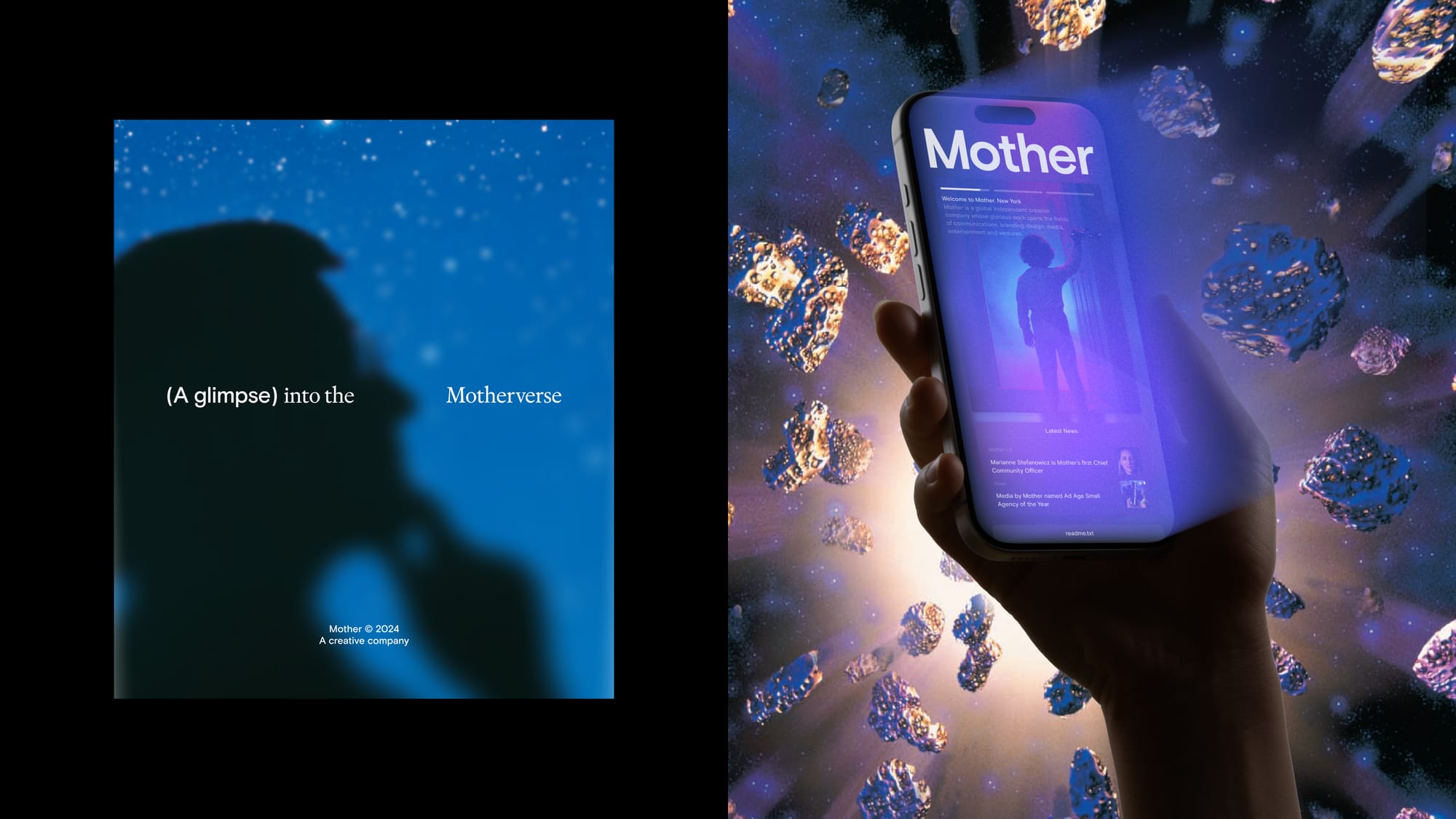
The conceptual logic for the Motherverse emerged from a truth about the company itself. “They’ve constructed their own mythology over time—a collection of beliefs, rituals, symbols, and characters that both employees and clients alike gravitate toward,” says Garrett DeRossett, partner at Alright Studio. “The Motherverse emerged as a way to surface that layer. Both Mother and we agreed that if the company’s culture is built on curiosity and exploring the unexpected connections that make up their DNA, then the website itself should reward those behaviors.”
Such projects reflect a broader shift in where designers see value. Functional, reliable digital experiences are no longer unusual—they’re expected. As Garrett puts it, “Speed and reliability become the floor.” In a landscape where increasingly sophisticated tools make it easier than ever to build websites that work, what differentiates one efficient project from another?
“The more interesting question now becomes: can you build something worthwhile that works? Does it have a point of view? Does it reward you for paying attention long enough to care?” asks Garrett.
“If everything can function as precisely and as quickly as we demand, the only moments that actually matter are the personal ones, the ones most difficult to automate and optimize.”—Garrett DeRossett
In the Motherverse, exploration becomes part of the storytelling. It works because Mother itself can’t be reduced to a single page of information, and visitors are allowed to arrive at that understanding through discovery.
A word jumble for a footer on Mother Design's website
Yet participation doesn’t always require an expansive digital world—sometimes it emerges through smaller moments of interaction and play. On Mother Design’s website, for example, a word jumble turns an otherwise overlooked footer into a playful moment of engagement. A similar philosophy underpins the ‘Play’ section on mirat-masson’s Readymag-built website, where, while sifting through the design studio’s work, you might find yourself putting together a doodle that will most definitely make you smile.
The 'Play' section on mirat-masson's website invites visitors to put together a doodle
The idea behind integrating the DIY doodle was to tickle the visitor’s curiosity. “We want the discovery of our universe to be more than just contemplative, top-down, or dictated by a purely utilitarian search for information,” says the designer and artist duo. “By integrating this participatory dimension, the visit becomes a playful experience.”
For mirat-masson, interaction helps transform websites from informational tools to “sensory experiences” that help humanize the relationship between the creator and the visitor.
Together With You's website for their collaboration with Fair.xyz
That idea extends beyond playful interactions. In Together With You’s website for their collaboration with Fair.xyz, a digital exhibition platform made with Readymag, visitors navigate artworks through WASD controls and arrow keys that bring to mind early video games. What could have been a straightforward scrolling experience instead becomes something closer to moving through a darkened room where the shadows melt away to reveal the artwork, turning navigation into the experience itself. The approach was intentional. “We hoped users would feel more engaged because we’re asking them to perform simple actions rather than just consume content passively,” says Artem Tarasov and Artem Taradash, founders of Together With You.
Participation as ownership
While interaction within these projects molds how people move through an experience, other designers are extending that logic even further, inviting people to participate in a brand itself. The most compelling examples don’t add engagement as a layer of novelty: instead, participation emerges from recognizing where involvement already exists and designing a system around it.
When London-based studio Land of Plenty began creating a brand world for Pot Gang—a subscription service that ships seasonal seeds, growing kits, and instructional content to its members—the first thing they noticed was its community. Members were in constant conversation with each other, sharing their growing journeys, swapping advice, creating content, and actively shaping the culture around the brand. In creating Pot Gang’s identity, “the question wasn’t how to engage the audience, but how to reflect the role they were already playing,” says Joe Russell, founder and creative director at Land of Plenty.
In Pot Gang's wordmark, the word 'Gang' is hand-drawn by over 180 subscribers
The result is an ever-changing identity. A stable ‘Pot’ anchors the wordmark, while ‘Gang’ appears in hundreds of hand-drawn variations contributed by more than 180 subscribers. Built around an idea the studio calls ‘Gang Made,’ the identity gives the community not just a sense of ownership, but a hand in influencing how the brand shows up in the world.
As Joe points out, our appetite for participation extends well beyond the world of design. Increasingly, people are valuing experiences over possessions and seeking a greater sense of involvement in the things they spend their time, money, and attention on. “We’re seeing people gravitate toward experiences that feel more personal, immersive and participatory,” says Joe. “Brands are responding to that.”
“Audiences don’t always want to sit on the sidelines anymore—they want to contribute, influence, personalize, and feel part of something.”—Joe Russell
Land of Plenty's brand for Pot Gang
Rather than presenting an audience with a selection of identities, as many variable brand systems do, Pot Gang’s identity brings them into the conversation, creating genuine involvement. “The community-created elements aren’t sitting alongside the brand; they’re part of the brand,” says Joe. “That creates a level of emotional investment that’s difficult to achieve through more traditional forms of engagement.”
With this, he adds, the role of the designer shifts too. “You’re no longer designing every outcome,” Joe notes. “You’re designing the framework that allows meaningful outcomes to emerge.”
Making room for participation
Designing a framework rather than every individual outcome calls for a degree of trust—trust that other people’s contributions and interpretations make the system itself more valuable. At NOT Wieden+Kennedy, that principle became the foundation for the studio’s own identity.
The NOT Machine's ability to play with density and size
When the team set out to create a brand for the studio, they wanted it to do a few things. “It had to be flexible, endlessly updateable, and open, with space for anyone to add their own individual flair,” says Adam Hunt, design director at NOT Wieden+Kennedy. That led the team to a generative identity, affectionately named The NOT Machine.
The NOT Machine allows anyone from the studio’s team to create custom animated wordmarks from any image or icon. As an infinitely customizable system, it offers each user a sense of authorship, and the studio the ability to bring their ideology and personality to the fore. A version of the machine has also been handed over to the internet.
The NOT Machine says 'Hi' to Readymag
“Once the team started using it, it became clear to us that this was something we shouldn’t keep to ourselves. It had to take the place of a standard portfolio site,” says Adam. “The idea that anyone could create with it felt like the right representation of who we are. We don’t subscribe to an elitist view of design—we see it as a way to move people and make them feel something.” In a way, the generative machine became a larger reflection of NOT Wieden+Kennedy’s innate ability to surrender a degree of control and invite participation, becoming a marker for their collaborative way of working.
For Adam, participation matters because it transforms audiences from observers into contributors.
“If a brand engages you enough to stop, good. Enough to play? You’ve won.”—Adam Hunt
The interaction itself is only part of the equation. What people remember is the feeling that they’ve contributed something of their own.
That same impulse extends beyond digital experiences. Earlier this year, Barcelona-based creative studio Hey launched Vi negre, a red wine with a black label designed to be scratched, marked, and annotated with memories, turning the bottle into an artifact, and a keepsake.
NOT Wieden+Kennedy's brand language
What ties these projects together isn’t a desire to introduce engagement for its own sake, but a recognition that participation creates a different kind of relationship. Whether through exploration, contribution, customization, or co-creation, asking people to invest a small amount of themselves in an experience can transform passive attention into something more meaningful, and more memorable. As Garrett argues, the challenge for designers today isn’t simply capturing attention, but finding ways to hold it that feel reciprocal rather than extractive. “The more we can find interesting, meaningful, and non-destructive ways of holding that attention, the more beauty the internet can provide.”