How aesthetic labels are changing creative work
What the explosion of internet aesthetics means, and how it’s changing creative practice.
If you spend any time online, you’ve probably noticed that every week seems to bring a new visual “core” or micro-category—whimsical design, analog aesthetics, cybercore, indie sleaze, the Frutiger Aero revival, hyperfemininity, or brutalism once again.
The Aesthetics Wiki currently lists 1,075 aesthetics, ranging from widely recognized to highly niche. Respected museums are publishing personality quizzes asking, “Which -core aesthetic is your style?” Walking outside can become an aesthetic of its own, and the obsession with aesthetics has become a meme.
To find out what’s happening in internet visual culture—and how, if at all, it influences designers and design—we spoke with a range of respected voices from the industry.
Evan Collins, co-founder of the Consumer Aesthetics Research Institute (CARI), an online archive documenting and naming overlooked visual cultures.
Ruby Justice Thelot, designer, artist, and cyberethnographer exploring internet aesthetics, digital archives, and visual categorization.
Nicolas Rodriguez, multidisciplinary graphic designer based in Los Angeles.
Constanza Coscia, visual designer and artist based in Milan, Barcelona, and Asuncion.
Maria João Magalhães, designer and art director from Porto.
Eli Marigo, visual and graphic designer based in São Paulo.
Beatrice Mucci, graphic designer based in Italy.
Eva Tamm, multidisciplinary designer based in London.
Thomas Cosin, designer, creative director, and visual artist based in São Paulo.
Naming visual culture
Visual styles have always existed—what’s new is how quickly they’re being named. Today, naming has become a collective activity, with archives, internet communities, and social platforms all contributing to a growing vocabulary for describing visual culture.
One example is CARI, a grassroots archival project that documents overlooked visual culture while coining—or helping popularize—labels such as Frutiger Aero, Global Village Coffeehouse, Nu-Brutalism, Y2K, and many more. One of the ideas behind CARI was the realization that the internet lacked authentic examples from many time periods. “There are a lot of issues with internet rot, websites not being archived properly, media disappearing all the time, and especially pre-internet media that just didn’t make the transition. I think it’s better to have more of that out there to help inspire people to create their own new works,” says Evan Collins.

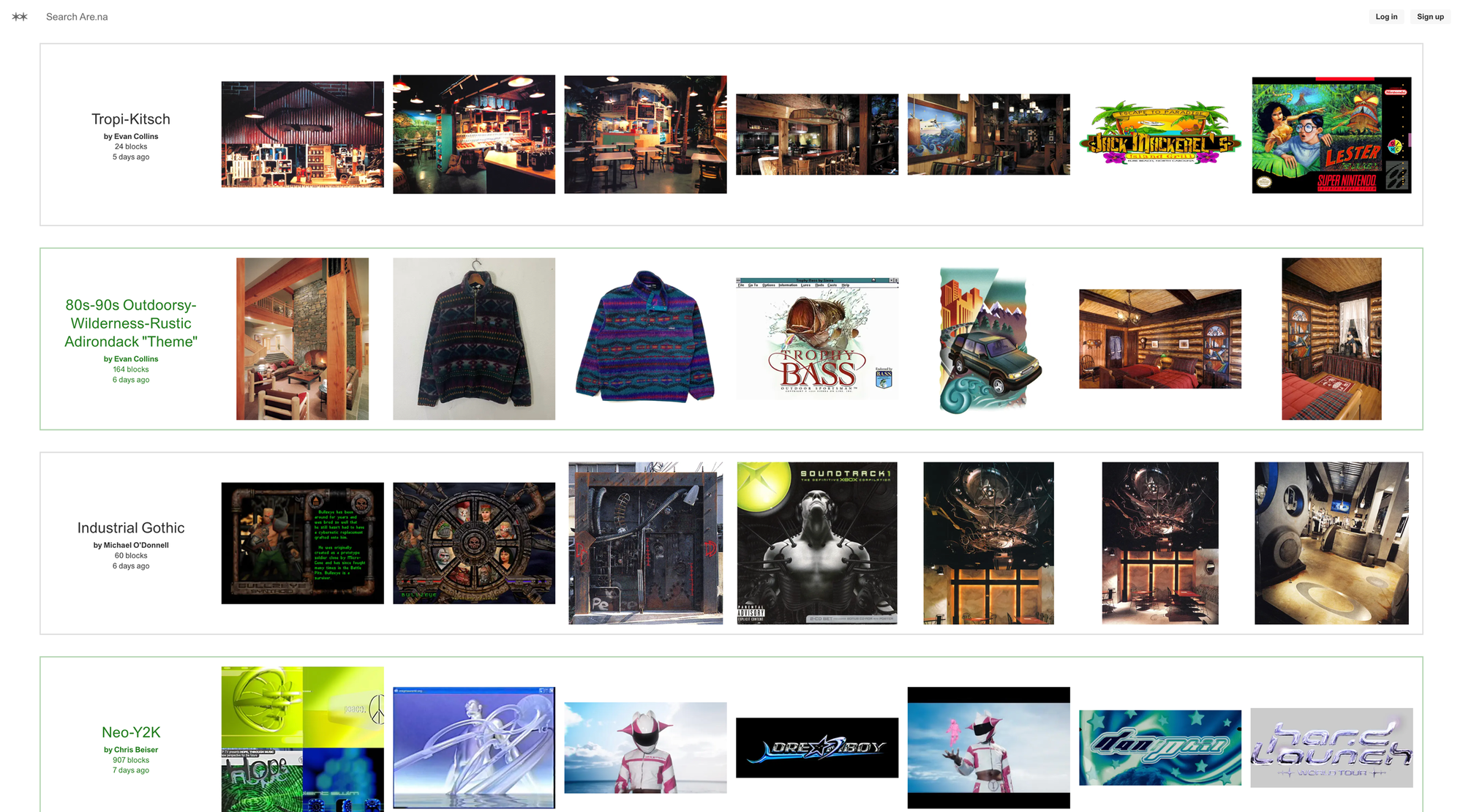
According to Evan, an entire culture has since emerged around these aesthetics. “They’re fascinated with our work,” Evan says, “and they’re interested in taking it further in their own way.” Ultimately, this has led to the rise of highly personalized aesthetics—a trend that’s especially visible on the Aesthetics Wiki. Evan believes this reflects people’s desire for community, identity, and self-expression. The trend became especially pronounced after COVID, when aesthetics evolved into a full-fledged subculture.
“Before, subcultures weren’t centered around an aesthetic exactly. They had an aesthetic, but they weren’t so hyper-focused on crafting it, sharing it with each other, or talking about these things in that way.”—Evan Collins
Ruby Thelot points to another force: taxonomy as a way of making sense of the world. He draws a parallel to Carl Linnaeus, who developed binomial taxonomy to bring order to the diversity of the natural world. “The place where chaos is felt most acutely today is the cultural world. The idea of new aesthetics is essentially taxonomization as a way of making sense of it, as a way of creating order in the cultural world. But these are models, lest we forget. We shouldn’t mistake the map for the territory, or the -core for the actual subculture.”
Ruby argues that today’s explosion of aesthetic labels wouldn’t have been possible without digital archives. “What the digital affords is the ability to build an archive that takes up no physical space. As a result, you can create countless subcategories because they’re no longer constrained by the physical limits of the archive.”
How aesthetic labels are changing creative work
Whether these labels emerge from archival work, internet communities, or our desire to organize visual culture, they’ve become part of the vocabulary surrounding design. The question is whether they’ve also changed the work itself.
Speaking the same language
Some designers note that the growing number of aesthetic labels has given them a shared language for communicating with other creatives—and, sometimes, with clients.
“These labels aren’t something I usually use when researching a new project,” shares Constanza Coscia. “More often, they’re the terms clients use to describe the kind of design they’re looking for.”
Maria João Magalhães has also noticed a clear shift in the language used to describe desired aesthetics, both in her personal work and in client projects. “Specific subgenres like ‘Frutiger Aero’ or ’indie sleaze’ weren’t part of my vocabulary until recently, but other ‘-core’ and internet-born labels have influenced how I communicate visual ideas.”
However, Maria notes that this language varies by industry. Most of her previous clients have been musicians, whose approach to aesthetics is slightly different: instead of using internet “-core” labels, they tend to reference other artists to convey the visual world they want to create.
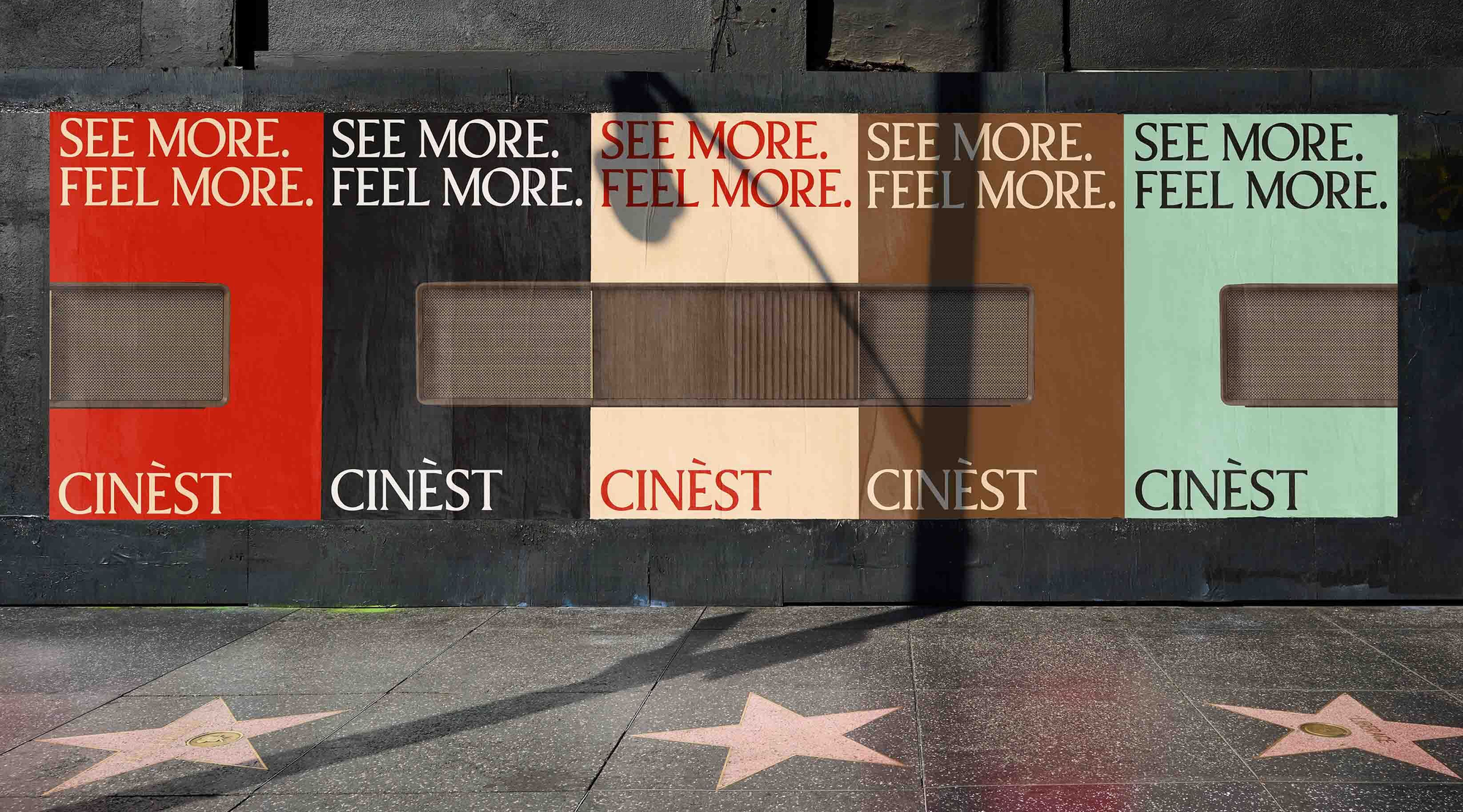
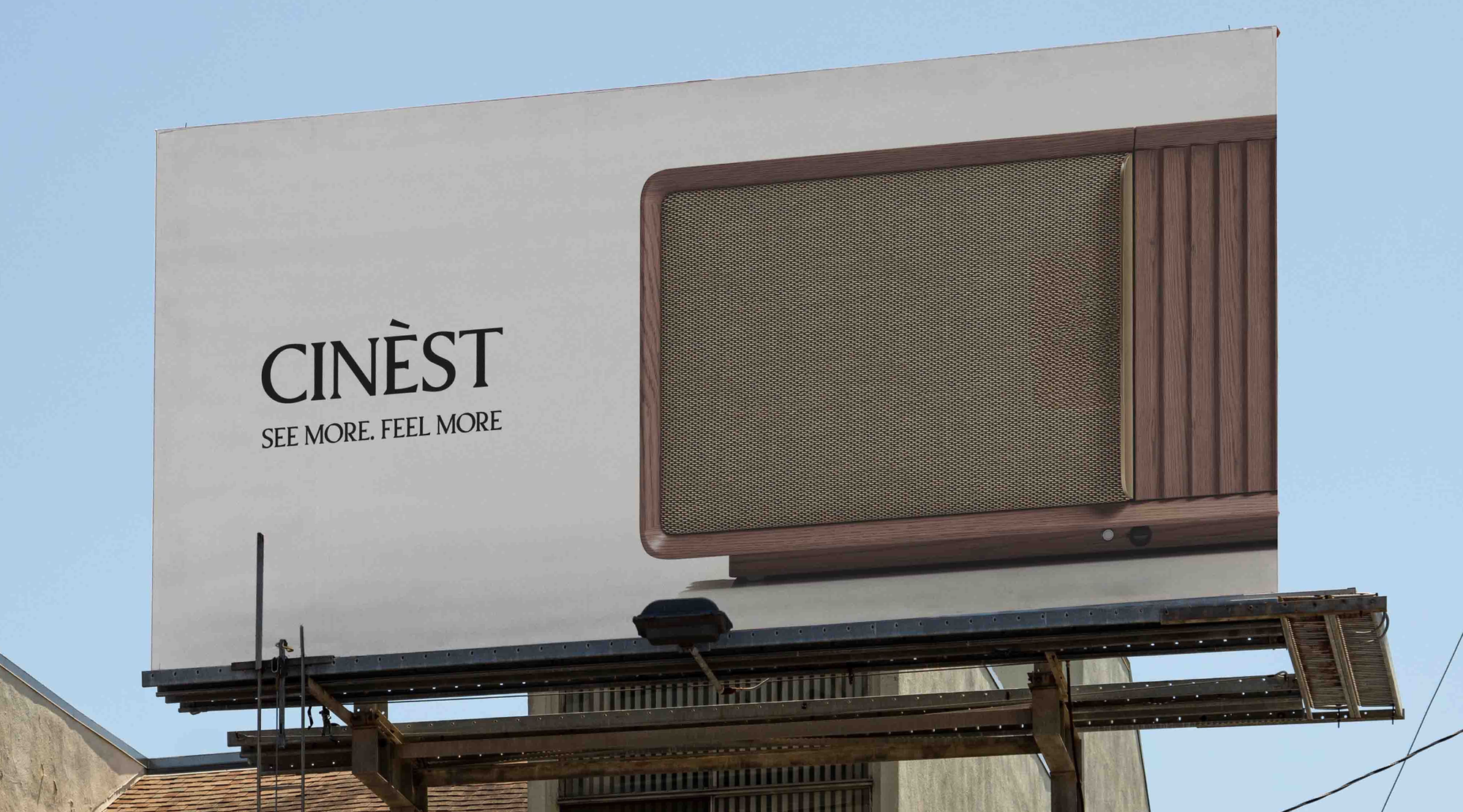
“The clients I work with don’t usually use these labels because they don’t know what they are or what they want. But with my colleagues and design peers, we talk about them all the time,” says Nicolas Rodriguez. “I worked on a brand called Cinèst, and the client wanted it to feel luxurious—but luxury can mean a lot of things. So we presented references grouped under different labels: Mid-Century Modern, Brutalism, Heritage Luxury. Once you group these references under labels, clients seem to immediately understand what you’re talking about.”
Labels aren’t the brief
While aesthetic labels have changed the way designers communicate, they’ve had a much smaller impact on the creative process itself. For most designers, they rarely serve as a direct framework or fixed point of reference.
“I don’t design with the label in mind. It's definitely a good starting point, 100%, but if you think about it all the time, it doesn’t solve the problem,” says Nicolas Rodriguez. “In the end, I don’t design based on an aesthetic—I design based on feelings and whether it fits the brief.”
Eli Marigo’s references tend to lean toward the vintage side, so instead of the current microtrends they’re constantly exploring niche art movements and historical trends. “The kinds of categorizations produced by social media have never influenced my work too much. Though I appreciate them, I think tying yourself to a single aesthetic can limit the full potential of your work, particularly when you’re starting out.”
For most designers, labels become useful after a project has taken shape.
Constanza Coscia tries to avoid relying too heavily on a specific “-core” during the research phase because she feels it can make her overly influenced by a particular aesthetic. “But it’s interesting to finish a project and recognize what aesthetic or -core it falls into, if any.”
Beatrice Mucci says she never starts from a style.
“I start from the brand or project itself. A project’s identity emerges through research, and if a label ever fits, it’s only afterward. These labels are descriptive, not generative.”—Beatrice Mucci
She adds that, “If I need a shortcut along the way, I’ll point to another brand or project rather than a style label. It simply gives you more to work with. By the time a label exists, it’s already been flattened, and it comes with its own rules—rules that leave you less free to follow the project as it takes shape.”
Maria João Magalhães agrees that labels become limiting when they’re treated as strict rulebooks. “It’s much more interesting to treat these aesthetics as fluid concepts, borrowing visual elements from one and mixing them with another.”
For Eva Tamm, the value of these labels lies in the way they can expand your visual vocabulary. “I feel like aesthetics in design are kind of like subcultures in life, so it’s important to be familiar with them and understand what’s going on. That way, you can play with these labels in a more relevant and appropriate way. The more I know about different aesthetics, the better I can create cool things.”
Thomas Cosin describes the balance this requires. While aesthetic labels can be useful tools, he believes that focusing on them too closely can shape a designer’s visual language without them even noticing. At the same time, being able to recognize and reference different aesthetic languages can help when a project calls for it. “When a project needs a specific intention, I’ll happily ‘steal’ from these different worlds—in the creative sense of the word—and combine them into something that hopefully feels original,” says Thomas.
There are, however, exceptions. When Maria João Magalhães was developing her capsule collection, Come to my party!, she used Y2K as a central reference, making it much easier to communicate the concept. Instead of listing individual design elements, naming the aesthetic conveyed the overall vision, from the color palette to the mood of the photoshoot.
Come to my party! by Maria João Magalhães
After the label
Once a style has a name, it begins to circulate, attract communities, shape new work—and sometimes, becomes something its creators no longer control.
Communities
Resurfacing—or simply identifying—visual categories can, if they resonate with people, spark renewed interest and inspire new styles.
Evan Collins argues that recognizing patterns, grouping them under a shared label, and making them widely accessible can give rise to online communities on platforms like Tumblr, Instagram, and Reddit. Once people have the terminology and become more aware of a particular style, they begin noticing it in their everyday surroundings, seeking out examples, taking photos, and sharing them with others. “I find that a really positive aspect of it. That has absolutely led to people becoming inspired by those earlier works to create new examples. We have whole research channels dedicated to the neo versions of different styles, like Neo Y2K or Neo GVC (Global Village Coffeehouse). There are massive communities centered around Frutiger Aero, creating artworks, sculptures, crafts, decorating their bedrooms, making graphic design, video games, and all kinds of other work inspired by these styles.”
Evan sees this as more than imitation. “They’re using our research not just to mimic these styles wholesale, but as inspiration to create new work and new media. They’ll mix styles together or draw from them to create something new.”
Commercialization
Once aesthetic labels enter the public sphere, they can also become marketing tools.
Evan Collins argues that CARI’s goal was never to package styles, but simply to create a shared language for discussing overlooked visual culture. Once those labels become widely recognized, however, they’re often repurposed by brands and marketers. “It happened with Whimsigoth. It happened, to some extent, with Frutiger Aero too.”
“The styles we study often emerge from subcultures and artists, but then they’re co-opted by companies and sold back to people. It’s kind of like doing their work for them, unfortunately, which is not the goal.”—Evan Collins
For that reason, CARI tries to place every aesthetic within its broader historical, social, and economic context rather than treating it as an object of nostalgia. “Instead of just saying, ‘Whoa, look at this thing from 30 years ago,’ we don’t want to think about it uncritically. We want to provide social, economic, and cultural context, and talk about which elements are problematic—especially with styles like Global Village Coffeehouse—and why we shouldn’t simply revive them uncritically.”
Ruby Thelot arrives at a similar conclusion in Indie Sleaze Did Not Take Place: “To frame a style with a label is to make it marketable. The labeling of loose cultural artifacts into a cohesive whole is not in service of history but rather in service of commerce.”
Simplification
Commercialization isn’t the only consequence of naming. Labels also inevitably simplify what they describe. A single term can flatten nuance and obscure context. Through its research, CARI tries to remind people that the boundaries between these categories are inherently blurry. Categorization is useful, but a single object, building, or piece of design rarely belongs to just one style. “There are so many influences on everything, so we have to be careful when putting these labels on works. They allow us to talk about them more precisely and understand how they interact with one another, but we also make a point of reminding people that all of this is constructed meaning.”
The challenge is that designers rarely control the labels attached to their own work, whether they embrace trends or not. As Ruby Thelot puts it: “Categorization is hard to resist because the maker is rarely the one who does the categorizing. That happens after the fact.”