What makes a design team work
Readymag’s head of design and CEO share what they’ve learned about building a design team.
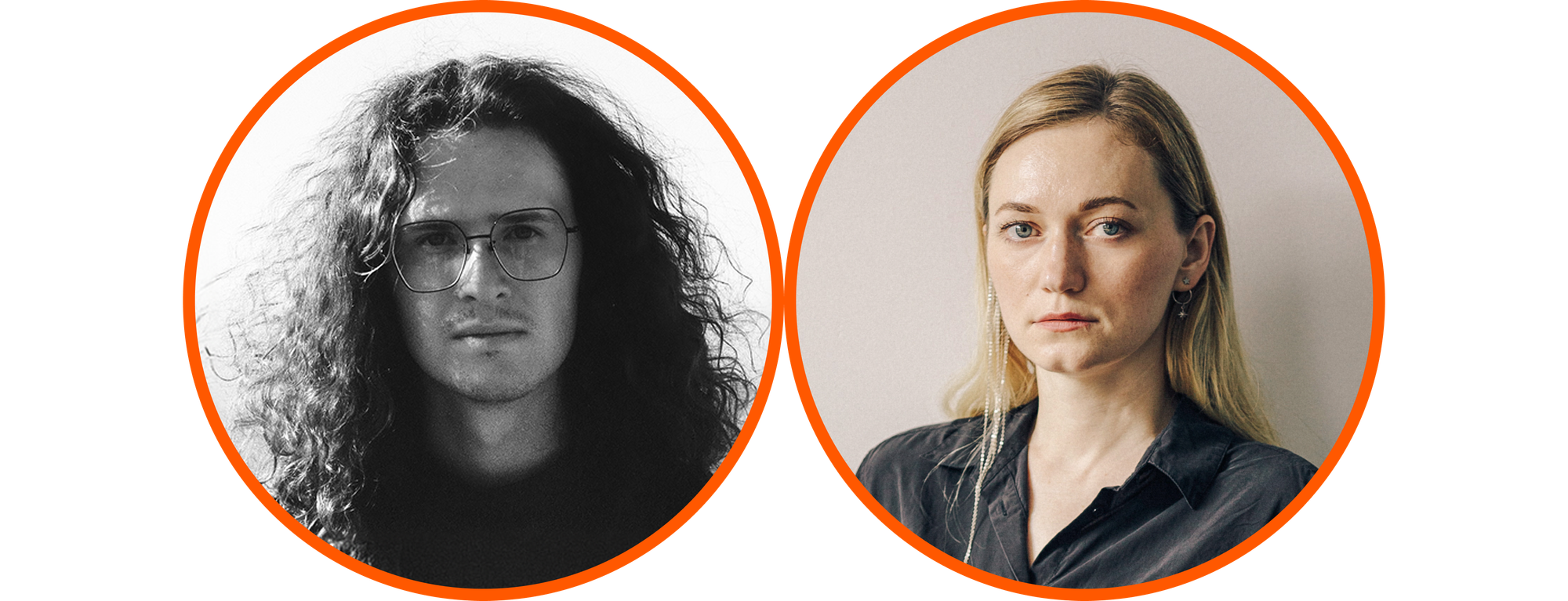
Over the past three years, Readymag’s design team has grown from three people to seven. As the team grew, roles became more specialized, and the way designers work together changed too. Alexander Moskovskiy, Readymag’s head of design, and Diana Kasay, co-founder and chief executive officer, share what they’ve learned about building a design team, what to look for when hiring, and how new people can change the way a team works.
This perspective comes from an in-house design team. Priorities and ways of working can differ depending on the team’s size, structure, and setup.
Skills are only the starting point
Building a design team starts with the skills you need at any given moment. “Usually, we realize we need a certain function, or that we don’t have enough resources in a function that already exists,” Alexander says. “Then we look for someone who can take it on.”
But then new questions appear. How will this person fit into the team? Will they simply add to the team, or will they change its structure and dynamics?
That second question has become increasingly important as Readymag’s design team has grown from three people to seven. For Diana, the change wasn’t so much in what a designer should be as in what the team needed from them: “Designers should be experimenters, innovators—that’s the base. But as processes became more complex, we started looking for people who could bring more structure, articulate their thoughts clearly, work well with others, and listen to feedback.” Then there was another change: “If we used to strengthen one particular area, now we look at how our superpowers are distributed across the team.”
Look at the work first
For Alexander, there’s still a clear hierarchy of requirements. “First comes the overall quality of the work—the portfolio, roughly speaking. I don’t just mean how beautiful it is, but also how complex and thoughtful the projects are.”
Then come the hard skills specific to the role, such as software or particular domains. Finally, there are the skills that allow someone to work independently: “This is probably the more practical side of the job, like taking ownership and working independently. That covers pretty much everything: meeting deadlines, managing projects, breaking work down into smaller tasks, organizing things, bringing other people in when needed, asking questions at the right time, and checking that we’re heading in the right direction.”
A strong designer can still be the wrong person
The portfolio is the first test, but passing it doesn’t mean someone’s going to join the team. Alexander remembers candidates who were strong enough to get through the first stage but didn’t pass what might be called “the vibe check.” Sometimes the reason is as simple as limited English, but often it’s harder to define. A candidate’s communication style can feel “too corporate, too formal, or simply too far from the way the existing team interacts.” Then there are more direct concerns: “Sometimes people are rude or too direct, and it feels like it would be difficult to communicate with them.”
For Diana, the main question is whether a person can actually work as part of a team.
“Even now we reject talented designers because we can tell it would be difficult to reach an agreement with them and for the rest of the team to work with them.”—Diana Kasay
In interviews, Diana tries to understand how a person actually works with others: how they respond to a colleague’s design, handle a disagreement, or find a compromise with someone from another team. Candidates often know how to say the right things, but when she starts asking about specific situations, a different picture can emerge. “They say: ‘They have to convince me. Give me arguments. Prove it to me. I know I’m right.’”
That can point to something deeper: “It may suggest that you don’t trust your colleagues’ expertise and experience. To some extent, it’s probably a sign of disrespect.”
Everyone can see things differently
As Diana points out, differences “help, but they can also get in the way.” Different points of view make a team richer, but can also make agreement harder. The important thing is knowing when to compromise and when not to. “Sometimes you realize that deadlines matter more because dozens of other people depend on you,” she says. “And sometimes it’s more important to stand your ground and say: ‘No, we need to make this really good, so let’s spend an extra couple of days on it.’” Being able to manage that tension is an important skill.
Alexander sees the same dynamic in the way different strengths work together. One person may have a better eye for photography and know how to work with it, another may be more meticulous, and another may be faster at generating ideas. “When these differences complement each other, that’s what makes the team stronger,” says Alexander. “Someone might enjoy setting up the design system, while someone else is good at coming up with new ideas. When they work together, one person can start something and the other can take it further.”
Designers need to work with other people
“On average, more than in other professions I come across, designers have a tendency to say: ‘I’m an artist, that’s how I see it’,” Diana admits. Having a point of view is important, but in a team, it can’t be the end of the conversation. “Everyone here is an artist, and everyone sees things differently, but we also have a shared task, a brief, and a lot of people who depend on us.”
That requires a certain level of personal maturity: “Being able to find compromises, challenge yourself, and say, ‘Actually, I can do this better,’ or ‘You’re right, I can approach this differently, and it will better serve the task.’” For Diana, the ability to hear other people isn’t specifically a design skill: “I think it’s universal for designers and non-designers alike.”
The process behind the work matters
Alexander says that a great visual result doesn’t necessarily mean the working process was equally strong.
“There are designers who know how to get a great final result, but it happens not because of the process, but in spite of it. The process can be just random chaos and magic, then a great result comes out of it.”—Alexander Moskovskiy
That can work for an individual designer, but it becomes more complicated in a team. “When you work in a team, when you need people to talk, or need people to exchange the results of their work, and so on, there can be problems with that.”
Alexander describes what he wants instead: “We have an API between us. We know how to talk to each other, communicate in the same language, and pass things back and forth. We’re one whole, rather than my personal chaos from which I’ll just give you JPEGs at the end.”
How new people change the team
Alexander doesn’t think of a new hire as someone who should come in and transform everything, but quite the opposite. “We don’t hire people who say, ‘I’m going to come in and redo everything, fix everything, and make it the way I think it should be,’” he says. “For us, it’s more about listening and observing for a while, then trying to integrate naturally.”
Still, the accumulated effect of new people can be significant. When Alexander joined Readymag, the designers worked more separately, and “everyone was doing their own thing.” Over the years, however, the team grew, more roles appeared, and so did more opportunities to work together. Diana says that in the past, the team’s work could be more centered around one person who was the mouthpiece of the group. Now all the designers participate, argue, find common ground, agree, and disagree.
“Readymag was designer-centric. Now it’s design-centric.”—Diana Kasay
The team isn’t supposed to be identical
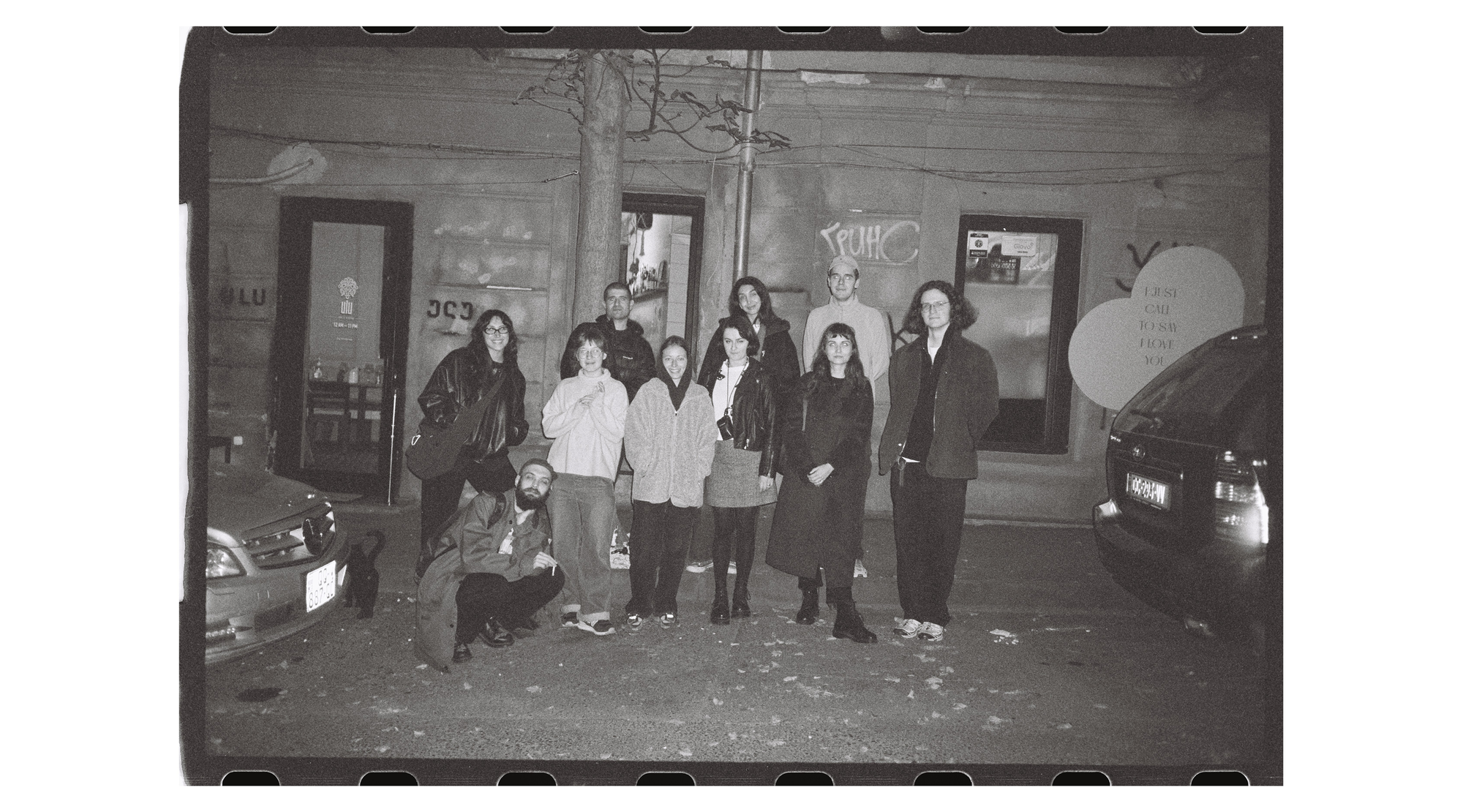
For Alexander, the ideal team has something in common with a circle of friends: people understand each other almost without words and share enough to work naturally together, but still differ enough to make things interesting. Diana’s version is less about personality and more about the distribution of strengths: “We try to create a mix of styles so that every designer brings something of their own, some authentic quality that we value at Readymag.”
That mix can come from skills, working styles, or the environments people come from. “Different schools and studios can lead to very different approaches to design, and those experiences leave a mark. Every studio and company develops its own culture. Readymag does the same, of course—when someone’s worked at Readymag for a long time, they take that particular way of thinking with them, and it remains noticeable,” Diana says.
There’s no perfect team on paper
No hiring process can tell you everything: people reveal new sides of themselves once you start working together, and the team keeps changing as new people join.
For Alexander, that’s part of what makes building a team interesting. “Because it’s about people, you’re constantly learning and discovering something new. It’s not some fixed block of theory you can learn to a certain percentage.” He also sees the same challenges across very different teams: “I talk to friends who lead design teams or work as designers in all kinds of companies, and I see that everyone goes through roughly the same things. Whether it’s a three-person studio, a company the size of Readymag, or a large corporation, roughly the same problems, strange situations, and challenges come up.”
For Alexander, this is a pleasant realization. “This isn’t unique to us,” he says. “It’s just that this is how it is everywhere, for everyone. I tend to underestimate what I have and think things could be much better—then I’m actually very happy when I find out it doesn’t get much better.”