One size doesn’t fit all: rethinking “good design” across cultures
Sometimes, seeing design differently means unlearning how we look at it.

Ideas of “good design” are often treated as universal: clarity, restraint, functionality. Yet many of these principles come from specific Western design traditions that were institutionalized and, at times, adopted wholesale.
What happens when we look beyond the dominant Western canon and question how design differs across cultures? How culturally specific are our concepts of “good design,” and what changes when we stop treating one design tradition as universal? To dig deeper, we spoke with:
Jodi Tang, founder of 5050Collective.
Nadine El Gabry, art director at 40mustaqel.
Dr Danah Abdulla, designer, educator, and researcher.
November, a Mumbai-based design studio.
Tiny Studio, a Readymag ambassador.

A broader view of “good design”
The design principles that we often treat as absolute emerged from particular histories, needs, and preferences. In a way, these principles are a time capsule, capturing the ideas and cultural currents of a specific moment in time. “Swiss Modernism was a perfect tool for post-WWII reconstruction when resources were scarce and older movements like Art Nouveau and Art Deco seemed irrelevant and excessive,” says Shiva Nallaperumal, co-founder of Mumbai-based design studio November.

Ideals like clarity, simplicity, and functionality helped make design easier to read and understand. But as Dr Danah Abdulla says, the notion that “good design makes a product understandable” is a cultural mindset. “Understandable to whom?” she asks. “Understandability relates to the Bauhaus principles of functionality and simplicity, which aim to strip things down. But this assumes that everything is black and white, leaving little room for nuance. Sometimes, people obsess over simplifying a design to the point that it becomes less intuitive and harder to use. It also strips away personality, reflecting the world we live in now and its obsession with a frictionless experience.”

But design has always been about meeting an objective or a need, and understanding cultural specificity and context. “We can’t judge a work belonging to Brazilian Tropicália through the same lens we would for a work born from British Punk,” says Juhi Vishnani, co-founder of November. “Context is everything: design is born of and for a purpose, and the purpose is almost always culturally loaded. Understanding that is key.”
Who shapes visual traditions?
The way we read design depends on our personal and cultural tastes. But when a particular tradition gets codified, it seeps into our collective taste—what we find sophisticated or garish—which is deeply rooted in class.
“Pierre Bourdieu made this case in his 1979 book Distinction, where he showed that what a society calls good taste tends to be the taste of whoever has the education, money, and platforms to define it, and it signals who belongs—and design is definitely no exception,” says Jodi Tang, founder of 5050Collective, a global creative collective. In design, schools, textbooks, media, and museums helped establish which aesthetics were considered elegant and which fell short. “So when someone calls a hand-painted shop sign or a face on a piece of packaging tacky, I always want to ask, ‘Tacky according to whom?’” adds Jodi.
“When someone calls a hand-painted shop sign or a face on a piece of packaging tacky, I always want to ask, ‘Tacky according to whom?’”—Jodi Tang
Colonial powers also shaped whose visual traditions were recognized as design. Western institutions had the influence to determine what entered the canon. While objects collected from some cultures were treated as design inspiration and references, work from others was more often categorized as artifacts and craft, and rarely analyzed in design.
How these principles and objects are studied is important too, as is language, because it helps share information. “The canon is written mostly in English and a handful of European languages, so whatever got documented in those languages became the data we all learn from,” says Jodi. “A tradition passed down through apprenticeship or written in a language the canon doesn’t read can shape visual culture for centuries and still never show up in a design curriculum.”

Which works became influential in design and were included in its history also depended on what had been documented and made accessible to learn from. Graphic design students at the National Institute of Design—India’s first design school—were already creating seminal identities for national institutions and brands in the ’70s. “But where are all the design books, publications, exhibitions, and documentaries?” asks Shiva about the missing histories of Indian graphic design. “We discover beautiful works almost always by chance: the title lettering in Tyeb Mehta’s avant-garde film Koodal, a stunning fold-out invitation by K.G. Subramanyan, or the original Cinthol packaging.”

Looking beyond the surface
Decoration in Eastern design traditions was at times read as the opposite of functionality. The principle that “less is more” reinforced that restraint was sophisticated. Jodi challenges this idea in 5050Collective’s editorial series, Design Beyond Eurocentrism. She points to the doors of Bhutan’s dzongs and monasteries, where each material and brushstroke in the painted walls and lintels held meaning. “Every element has a job, and together they work as a visual prayer that filters out negative energy before it reaches the inner sanctum, and the whole door is held together with interlocking joinery—no nails at all—out of respect for the timber,” she explains. “If you stripped all of that away just so it looks clean, you’d lose the whole reason the door exists in the first place.”


Doors of Bhutan. Photo Courtesy: 5050Collective
The series explores more of these visual traditions and the stories that emerge when we look beyond a Eurocentric lens. Take, for example, the fantasy coffins of Ghana, called abebuu adekai, meaning “proverb box.” For the Ga people of coastal Ghana, death is a passage to the land of ancestors, and one must arrive there as themselves. “So a fisherman gets buried in a sardine and a farmer in a cocoa pod,” says Jodi. The coffins, both contextual and personal, carry cultural meaning. Yet, in his influential essay, Ornament and Crime, architect Adolf Loos argued that decoration was wasteful and backwards. “That idea slowly turned into a design value, where plain started to read as modern and advanced, and anything decorated read as behind,” says Jodi.
But decoration has always carried information: a motif, a stitch, or a pattern can speak of identity and history, and become a mark of belonging.
“Once we label something decorative, we sometimes stop looking at it closely, and we miss everything it was trying to tell us."—Jodi Tang
The way design is taught and passed down influences how designers learn to recognize and interpret visual work. “The perception we had in college was that good design announces itself: even if it’s clean and minimal, it has to feel ‘designed.’ There has to be ‘effort’ shown,” says Juhi. “So a poster for the local political leader we would see on the street wasn’t ‘designed’ even though they often employ very inventive typography and information hierarchies. Neither is a punk flyer or the logo for an odd publisher.”


Fantasy coffins of Ghana. Photo Courtesy: 5050Collective
Ratta Bill, co-founder of Tiny Studio, recounts a similar experience. “We used to see vernacular designs, such as food stall banners and truck paintings, as merely tacky and irritating. Yet now, we feel there’s much more to unravel than just mismatched colors and typography.”
Contemporaneity isn’t exclusive to the West, and everyday visual culture—which can be seen as traditional, or frozen in time—can be fluid and adaptable. Nadine El Gabry, art director of Cairo-based design studio 40mustaqel, points to Arab and Egyptian visual traditions that have long engaged with sophisticated compositional ideas. “Visually speaking, the Egyptian and Arab heritage displays masterful executions of balance, contrast, utilization of white space, and other compositional devices that have been used in ancient inscriptions, religious manuscripts, and modern Arab prints, graphics, and signage,” she says. “With the passage of time, we see their evolution and their adaptation to the needs of each age.”
Design for In the Bellies of the Rocks—a video installation by artist Ayman Zedani—by 40mustaqel
At 40mustaqel, decolonizing graphic design means challenging established conventions, such as the sacredness of type, typesetting, and letterforms. “At the beginning of my career, it felt like a domain to respect and adhere to,” says Nadine. “But at the studio, the questioning of all design boundaries is welcome. We often joke about our tendency and love for playing with type and letterforms till they become illegible.” Interestingly, this practice isn’t simply about upending rules for their own sake, but about exploring what possibilities surface when designers revisit ideas that have become untouchable.
Beyond a single standard
Whether “good design” can ever be universal depends on what we mean by universality. Instead of being a particular aesthetic to conform to, can it be a way of working? “Universality should be about nuance, about context; it’s revisable, not fixed,” says Danah. “An idea we think works mostly everywhere shouldn’t be expected to be adopted wholesale somewhere else.”
“It makes sense, now more than ever, to practice skepticism and be critical of the design and media we consume, questioning the narratives they reinforce and the ones they leave out,” adds Nadine. “Maybe ‘good design’ shouldn’t begin with the pursuit of universality but with a willingness to redefine what’s deemed universal.”
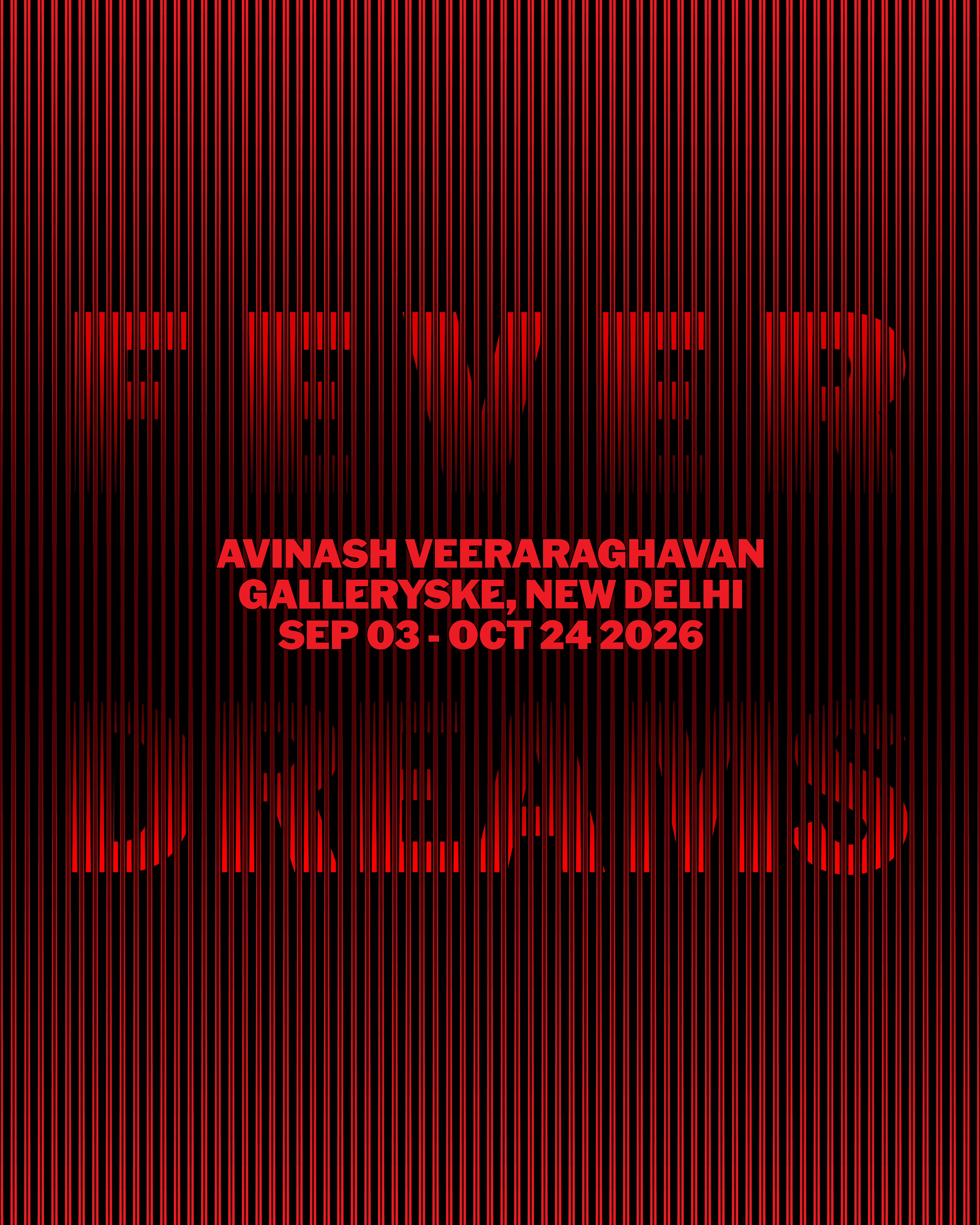
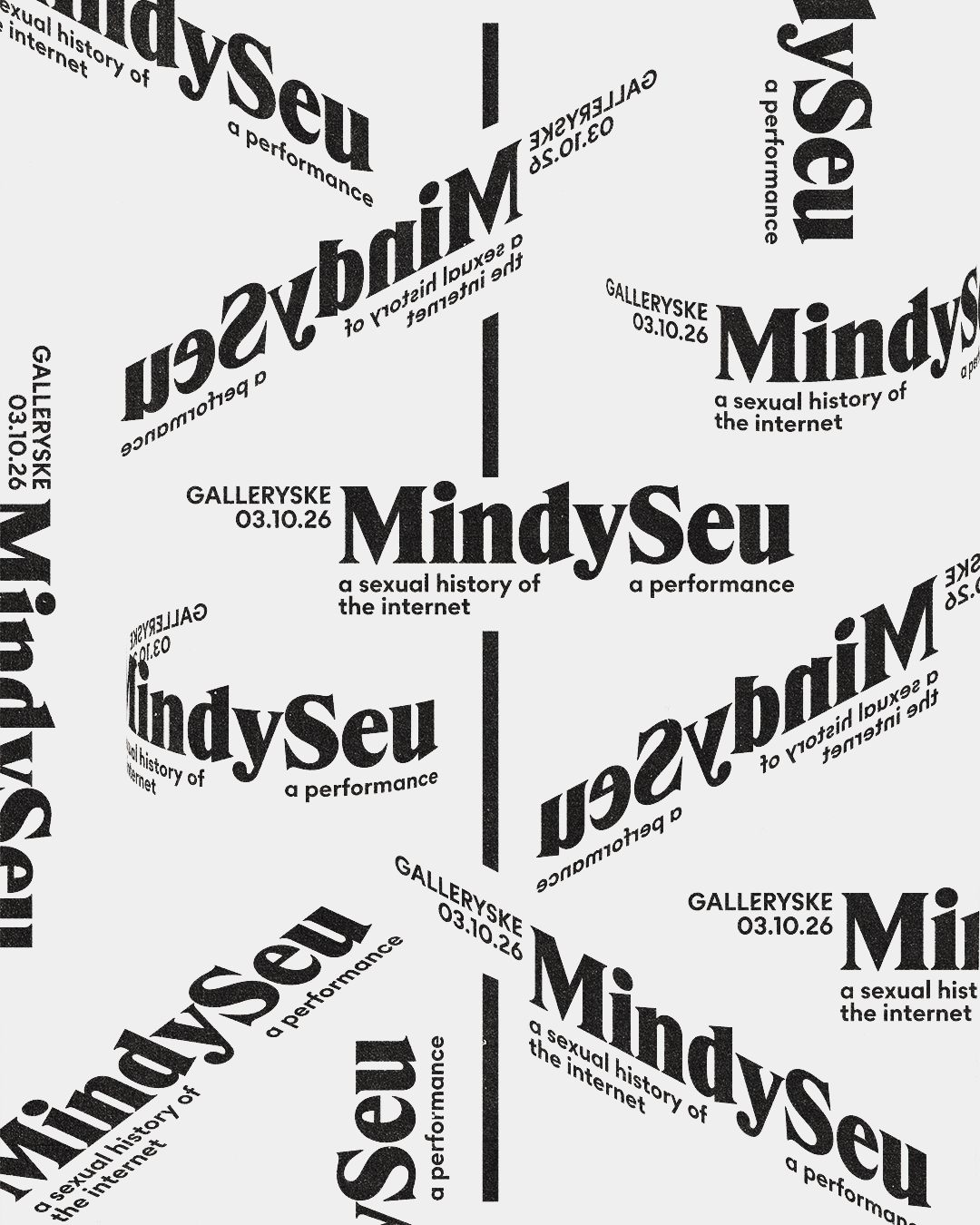
November's posters for Fever Dreams, an exhibition by artist Avinash Veeraraghavan (left), and a lecture-performance by Mindy Seu (right) at GALLERYSKE
For November, this means looking closely at the thinking behind a work rather than its outcomes. “We tend to see intention as the bar for good design, and that’s a universal principle,” says Shiva. “Cultural context comes next, but intention, inventiveness, and originality always come first.”
A work’s ability to strike a chord might not depend on universality at all. Tiny Studio’s Cantik Manis—a book about traditional Indonesian desserts, with a design inspired by the vernacular visual language of Indonesian markets and nostalgia—found an audience in art fairs in South Korea and China. “People felt it resonated with today’s ‘kawaii’ aesthetic,” says Nadine Hanisya, the studio’s co-founder.


Editorial design for Cantik Manis by Tiny Studio
Cultural codes in design can help a piece of work communicate across borders, and they can also change how we judge it in the first place. What might appear as unconventional or different by one set of standards can make sense when considered in relation to its own purpose.
This is evident in Kumar magazine, an avant-garde Gujarati publication that rejected the Modernist grid and the visual consistency associated with good design. “It was the antithesis of modernism, which was a heavy influence at the time, not just in the world but in the city of Ahmedabad itself, where the magazine was being created,” says Shiva. “But the design and ethos were appropriate for its context and content.”
“That’s the key takeaway here: there’s no such thing as good or bad design, just appropriate or inappropriate.”—Shiva Nallaperumal
Perhaps moving beyond a single standard calls for a larger audit of the assumptions we bring to a work, asking what it’s trying to do, and being open to forms of design that challenge what we already know to recognize. “The advice I’d give designers is pretty simple: whenever someone tells you something is just how it’s done, ask who set the rule and why,” says Jodi. “Then look into your own culture and draw inspiration from there, because chances are there’s so much in it that never made it into the textbooks you learned from.”