What happens when web designers think like craftspeople?
When craft brings constraints into a medium built for flexibility, it can reshape how the web looks, behaves, and comes together.
Most digital design begins with a grid, a frame, and a screen. The medium makes it easy to move, duplicate, undo, or completely rethink a design with a few clicks. Craft offers different conditions: materials have their own limitations, and each cut, fold, or stitch demands a degree of commitment.
A few designers are deliberately bringing these material processes into digital design. But what happens when web designers start thinking like craftspeople? Is craft simply another visual language for the screen, or can a material process change the way a website is conceived, designed, and experienced?
We spoke with product designer and interactive media artist Jackie Liu, textile artist and designer Meryl Prendergast, designer Martina Wunderlin, and fiber artist and designer Ida Nariman about how material processes can shape digital work from the inside out.

Craft changes the design process
Land on Meryl Prendergast’s portfolio and you’ll find yourself standing at the doorstep of a pink, hand-embroidered dollhouse modelled after her childhood home. Stay for a while and you’ll notice the sky change color from daytime to dusk to night.
Made with Readymag, the website is assembled from hand-embroidered elements—from the airplane that flies across the home page to the retro TV that plays a video from Christmas 2003, the year Meryl got her first sewing machine. It feels like a natural extension of a textile artist’s work into the digital realm.
Meryl Prendergast’s portfolio
Working with embroidery, however, introduced limitations and compelled Meryl to reconsider what the website actually needed. “In making the physical work, I was forced to slow down and think about what was really important about my website,” she says. Embroidery can’t be endlessly edited, and that physical investment turned every creative decision into something that had to be justified.
“I started with a bigger map of pages than I ended with, but that strengthens the website as a whole. The limitation ended up being a great strength.”—Meryl Prendergast
While software removes constraints—making it faster and easier than ever to create work—material processes introduce them. Bringing the two together means carrying the qualities of one medium into another and discovering new possibilities in the process.
When Martina Wunderlin began designing the Readymag-made website for Cydn3yyy—a fashion label that works with vintage imagery and designs, hand-printing them onto clothes—she took cues from a physical archive folder, complete with tabs and images held in the corners of pages with gem clips.
Martina Wunderlin's website for Cydn3yyy
Instead of recreating the visual language digitally, she worked with paper, printing, cutting, and scanning the photographs by hand. The material gave her fewer ways to revise the design, and she found that it made the next decision feel more obvious. “Paper actually made the process much easier,” says Martina. “It drew the path that I had to take, because I had a lot less choice.”
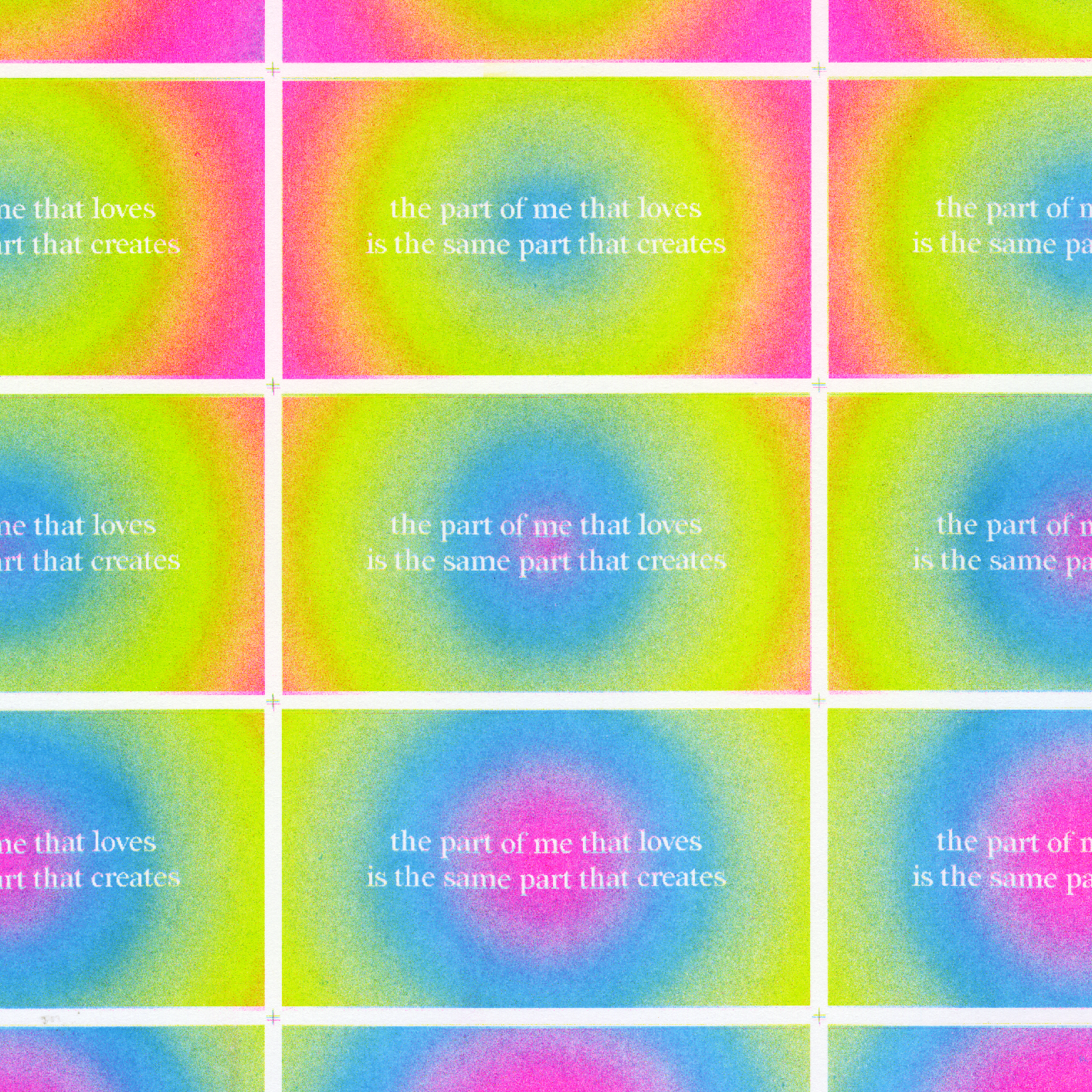
Working with physical materials makes it imperative for designers to edit their work, but it also influences how that work is created in the first place. For Jackie Liu’s I Feel So Much Shame—a browser-based interactive poem built from scanned Risograph prints—the constraints of the printing process encouraged her to start small and build slowly. “Working in an extremely materially constrained manner forced me to savor capturing the fine details,” says Jackie. “The first scene is just a button and a link on a white background, but I made sure to account for every possible hover and click interaction. That allowed me to slowly build up to more complex interactions and animations.”
I Feel So Much Shame by Jackie Liu
Material processes bring their own logic and language to the web, along with things a designer can’t always control. Even when Jackie carefully controlled the input, the Risograph process introduced its own variations, from misregistration to specks of dust picked up by the scanner. “With websites, and coding in general, there’s often a high level of control and a desire to make things pixel-perfect,” she says. “But by bringing Riso in, I had to accept that the loss of control is what makes it what it is.”
Craft becomes interface logic
Discussions around analog media and physical making processes in digital design often revolve around aesthetics—paper textures, visible grain, uneven edges, the visual language of things made by hand. When these aesthetics are created digitally, the work often borrows the cultural associations of analog media without inheriting the labor or material conditions that produced them. But what happens when a work begins with craft, and then its digital translation borrows its material logic?
The website for Ida Nariman's Touche Studios
Fiber artist and designer Ida Nariman’s portfolio comes to life through hand-cut and assembled pieces of felt, including a flock of sheep, a fire-breathing dragon, and a flying cow. Working with the pieces physically became a way to prototype the digital experience. “Because I could physically pick up and rearrange the pieces, I began imagining the website as something visitors should be able to manipulate rather than simply scroll through,” says Ida. “The material process helped determine both the composition and the eventual interactions.”
The physical pieces also gave her a reference point for animation. She moved the felt pieces around physically and translated those movements onto the screen.
“Anything I can do to the object with my hands, I can do in Readymag.”—Ida Nariman
“Seeing how I want my objects to move in real life became a direct inspiration for what I created on screen,” adds Ida.
For Martina, too, the way we interact with a paper folder—flipping through pages and tugging at tabs—became a blueprint for the website’s interactions. “It was a challenge to reproduce what I had in front of me in the digital world: mimicking the movements of opening the folder and selecting a page,” she says. “When people see a folder they’re so familiar with, they expect to interact with it in the same way they would in real life, so I wanted the website to respond to those actions. I relied on how I was opening and handling the physical paper folder to know what to animate and how.”
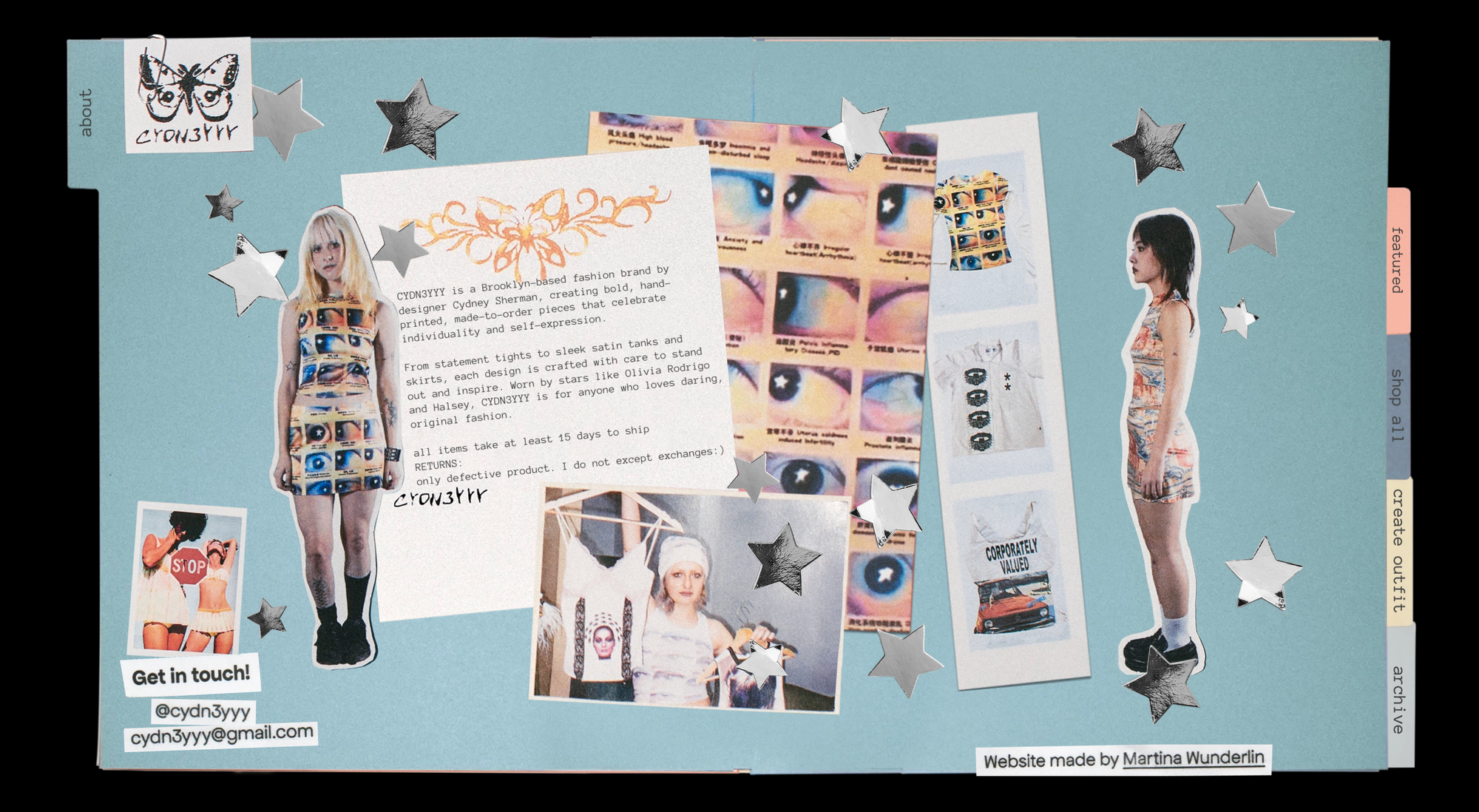
Cydn3yyy’s website echoes the principles of skeuomorphism, when early digital interfaces mimicked familiar objects—like physical buttons and folders—to help people understand how to use computers. Martina borrows that same relationship between the physical and digital, but to bring a sense of delight. “Since digital interactions are so common and present in our daily lives, I wanted to flip it and introduce some ‘real world-like interactions’ back into the digital space to make it feel tangible and fun again,” says Martina.
Craft expands what the web can do
The tactility and techniques of craft can give the web new dimensions and meaning. Meryl argues that in her portfolio the handmade elements give the website a texture she’s not sure she’d be able to replicate digitally. “A polished, digital website would make it hard for my textile art portfolio to feel like it belonged online,” she says, and that handmade quality has seeped into the way the website is navigated, shaping how people discover her work.
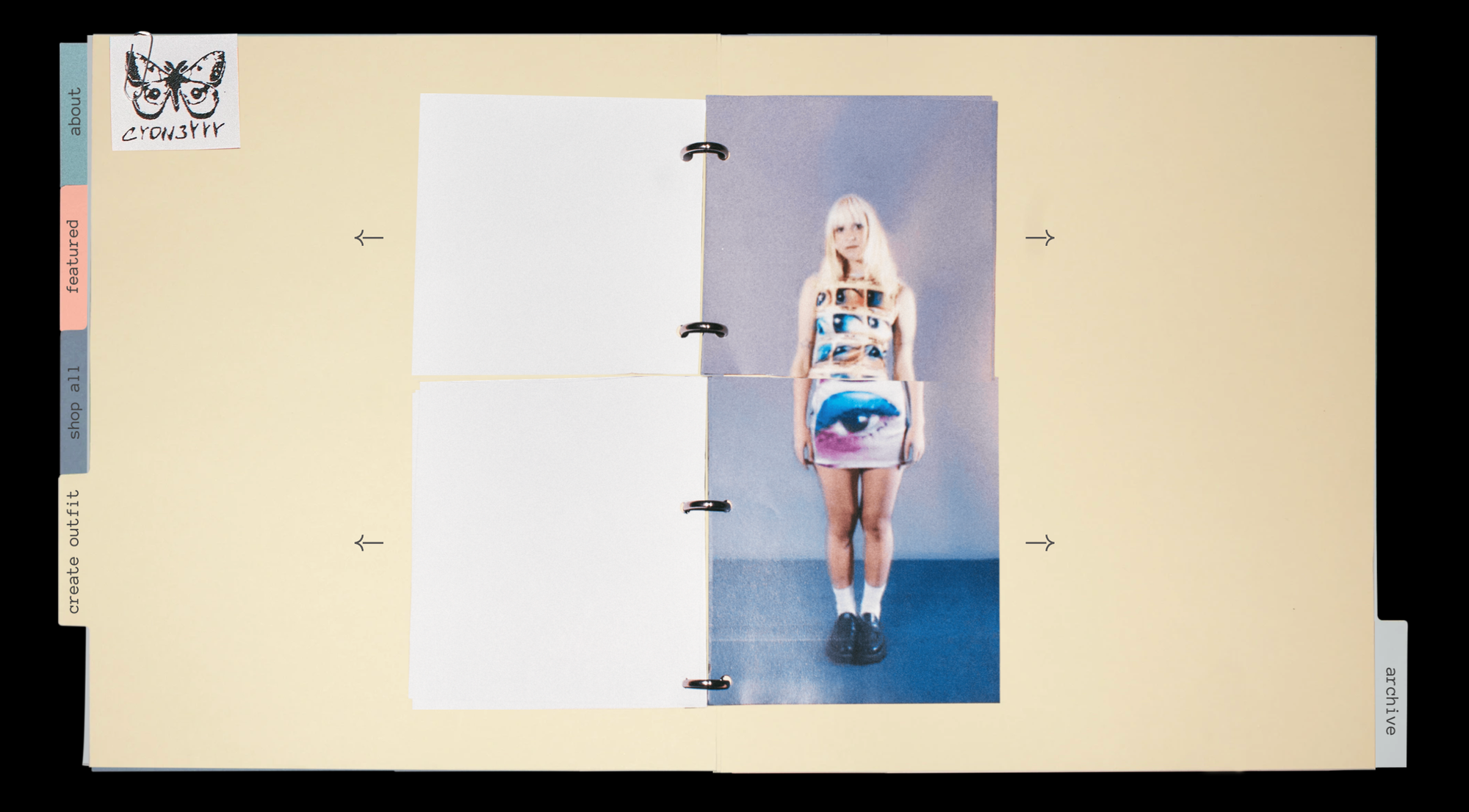
On Cydn3yyy’s website, Martina created a retro spiral-bound flipbook that lets visitors mix and match garments, photographing and scanning the images to preserve the slight misalignments of the physical pages. The spiral catches the light differently as the pages shift. “It feels more alive in those kinds of details,” says Martina, pointing to the qualities that would have been difficult to recreate digitally.
When two disparate mediums come together, the result can be greater than the sum of its parts. In her portfolio, Ida explains, fiber art offers texture, tactility and a visible relationship to time and labor, while the website offers movement, interaction, and the ability to share a piece with people regardless of where they are. “Each medium expands the other: bringing them together allowed me to retain the intimacy of something handmade while giving it behaviors that the physical felt pieces couldn’t have on their own,” she says.
Such creative possibilities emerge when designers lean into the qualities that digital tools usually try to eliminate: repetition, inefficiency, and discomfort. For Jackie, that meant embracing the labor of making. The process of creating the website, she says, was about “savoring the hard work, even if it’s extremely repetitive, unoptimized, and uncomfortable, because that’s often where growth is.”
Ultimately, designing for the web while thinking like a craftsperson means treating materials as collaborators, letting them suggest new creative directions. It is only when a physical process carries through into the browser that it transforms from an aesthetic into a way of thinking.
Ready to bring a different perspective to the web? Sign up for Readymag and start making your next project.