When personal experiments become creative work
Anton Repponen shares why not all work should start with a brief and how personal obsessions can evolve into full-fledged projects.
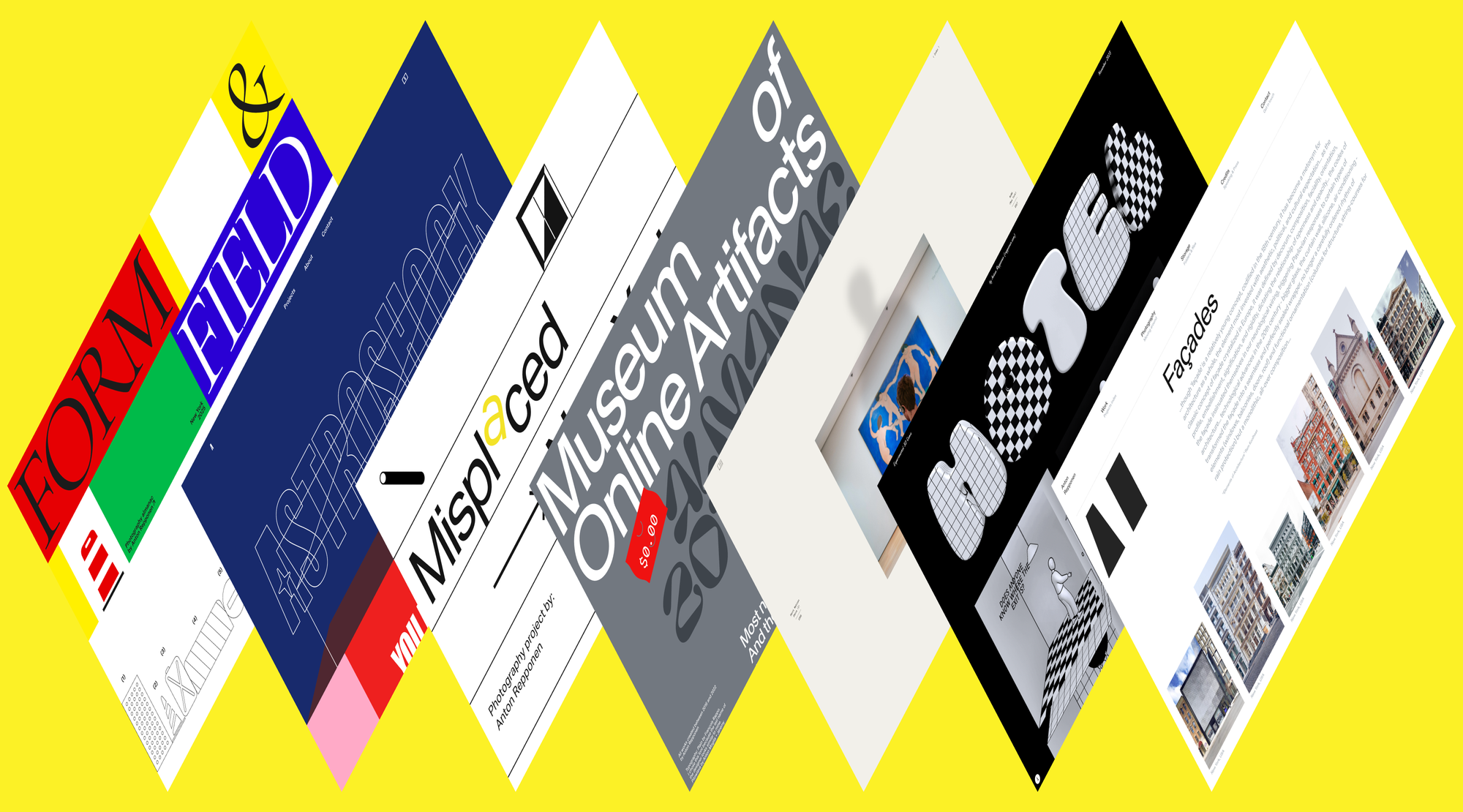
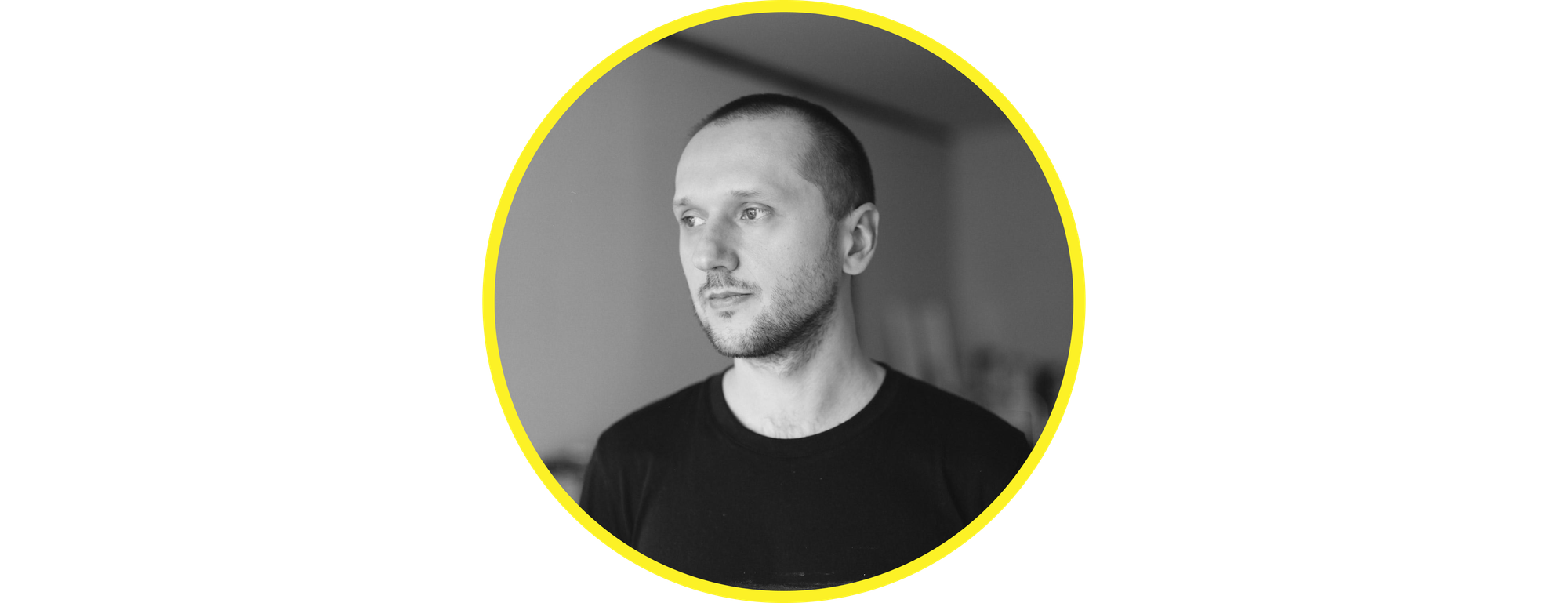
Anton Repponen began designing over 20 years ago and has been using Readymag since 2013. He’s the former creative director of design agency Fantasy Interactive and a cofounder of design studio Anton & Irene. His personal list of clients includes Google, Microsoft, Netflix, Sony, Balenciaga, Apple, and more.
In 2025, Anton won Website of the Year with his project “People Look at Art or Art Looks at People,” which grew out of personal experiments. In this adaptation of his online talk for the Readymag community, he shares why not all work should start with a brief and how, over time, personal obsessions can evolve into full-fledged projects and new approaches to work.
Growing up around pattern makers
I’m originally from Tallinn, Estonia. Both my mom and my dad made patterns for clothing. At the age of six, I knew how to use a sewing machine and overlocks and all those things. I could actually put together a pair of jeans from scratch.
When I graduated school in 2002, I went to study architecture because I thought I wanted to be an architect. I kind of wanted to do something creatively, but I had no idea what design was. Growing up in Estonia in the ’90s, interaction design as an industry didn’t exist at all. Architecture was the only thing that kind of had the vibes of what I wanted to do.
But as I was studying architecture, I started doing some digital work with early websites, and I found it amazing. By 2005, I’d put together my first portfolio and it got noticed by a company called Fantasy Interactive. They offered me a job as an interaction designer, and I moved to Stockholm in the summer of 2006. I remember walking into the office and seeing people working with these big clients like MTV and Ford, having developers building things and stress testing things. For the first time in my life I was like, wow, this is actually real work. Two and a half years later I got relocated to New York. I stayed at that job for nine years and grew into a creative director role. I was managing a design team across five different offices and just working, building websites and interfaces.
But something else was going on in the background. I was always taking photographs along the way. I’ve been taking pictures much longer than I’ve been designing because I got my first camera when I was 13 years old from a skateboarder friend. As long as I’ve lived, I’ve always been taking photographs, and I’ve always had a camera with me.
Architecture taught me to think spatially, the web taught me to think in feedback, and photography taught me to pay attention.
Experiments can become projects
Among the different kinds of work I do, I find personal experiments the most exciting because no one else is involved and I can do whatever crazy stuff I want. This is where the unknowns take over. Tools play a role here: the right ones can cut time, costs, and the friction of making. They can also turn experiments into projects.
After a few years, I realized that I have too many random JPEGs. They don’t belong to a particular project—they’re just random things I come up with one way or another. They were just sitting on my hard drive until I realized, you know what, maybe I can put together an online museum. And I called it a Museum of Online Artifacts.
Museum of Online Artifacts
I built this project with Readymag. It’s essentially just a long scrolling page with all those random experiments taking up one slide. There’s a bunch of play buttons from QuickTime organized in different shapes. There’s a running man from a game that I wanted to do one day. It’s just crazy JPEGs that don’t belong anywhere. But when they’re put together, they start to look very interesting.
Doing this thing gave me an idea: why don’t I put all of them together in a book? Now every year in December I put all these random JPEGs into one book. It doesn’t have any client work, and it doesn’t have any real projects where multiple people are engaged. I’m just taking random stuff, putting it in the book, and printing one copy. I give the copy as a present to someone, then I update the book with more work that I’ve done throughout the year and make a new copy. Then the next year I’ll do it over and over again.
Learning through experiments
I also use personal experimentation to learn new tools. For example, there was a moment when I wanted to try Spline, so I came up with a project and built it. I used Readymag to embed the Spline scene and built this abstract 3D comic book that also works as a 3D scene that I can browse. I don’t consider it a “project” project—it’s not like I’d really show it somewhere. But all of those things later gave me cool ideas for when I actually do client work.
Experimental 3D Comic
I did a portfolio website for friends at Astroshock, a development company based in Barcelona. When they came to me and said, “Hey, we want to redesign our portfolio,” I spent a lot of time thinking: what is a portfolio of a development company supposed to be? I ended up with a standard approach with a grid of project thumbnails, a list, and something else. But I’d seen it so many times that I wanted to try something different.
Then I remembered that 3D comic I’d made and thought: could this work as a portfolio for a development company? That idea became the website, which is live today. As you scroll down, each project is presented almost like a floor in a building. You can click on it, zoom in, and browse. I spent about two weeks getting to this idea and only two hours designing the entire portfolio because the idea was already there.
And the reality is that I would have never come up with this idea if I hadn’t done that comic thing at the very beginning.
Astroshock website
Starting without a goal
Once I saw an exhibition by Markus Brunetti, who was photographing cathedrals around Europe. I couldn’t understand how he managed to capture these buildings without distorting the perspective. I tried searching for interviews where he described his process, but there was nothing whatsoever, so I started experimenting. I tried different ways of correcting perspective, and one thing led to another—eventually I had 11 images and enough experiments to start thinking, okay, maybe there’s a project here, but what am I going to do with these images? I could just post them on Instagram, but that’s kind of boring. So I asked a friend, Jon Earle, to write short stories for each of the buildings. Then it became a website.
Misplaced → New York
The project got picked up by different publications, who started asking me about it. The funny thing is that nobody was really interested in the actual story, which was just me testing things with my camera and correcting perspective, so I made up different stories for every single publication. For CNN, I said I was interested in how the building would look out of context. For the Guardian, I talked about removing the known architecture from New York. For every single one, I gave totally different answers because nobody was interested in me testing out my camera and correcting perspectives.
The project still lives, but in a different mode. Every time I travel or see a building, I always take a photograph of it. On my website I have this hidden section called Façades, which is by now maybe 500 or 600 images of different façades that I capture around the world. No one looks at this page, and I never advertise it—I just know it’s there, and I like that it’s there.
Façades
To make personal projects, you have to embrace your obsessions. Don’t look at what other people like—do what you like. There’ll be people somewhere who’ll respond to it.
Look back at what you’ve already made
The other way personal projects can begin is by looking back. When I looked through my Lightroom folder, I noticed a lot of recurring themes. I have photographs of people running, flowers, airplanes, and light beams. And I started realizing that maybe there are projects hiding in there.
I had a lot of photographs of people in beams of light, and I ended up selecting maybe 30 or 40 of them and building a little gallery. Another time, I noticed that some photographs could be paired to become something new—here’s a car in Barcelona, there’s another car in Kyoto. And the moment I place these two images together, it’s almost like a brother and sister finding each other. I created a Figma file where I exported all these random images and started collecting pairs, and that eventually formed a project called Form & Field.
Most of the images were taken without me knowing this project existed. Now, being fully aware of it, I take pictures deliberately when I see something that I might match with an image I’ve already selected.
Form & Field
After launching Form & Field, I went to the Tokyo Art Book Fair where I saw a Japanese publisher making books out of ordinary stationery, and I thought, wow, I can make books like this. So I bought different paper, different pockets, and a hole puncher, and over the course of a week I created a beautiful one-off book with the images from Form & Field. When I punched all the holes to put the paper together, I noticed all this confetti that looked way too beautiful to throw out, so I decided to include it in the book on the very last page.
Bringing yourself into the project
The very last project here is People Look at Art. Every time I go to the museum—and I always go to museums, whether in New York or when I travel, especially the free ones—I’m obsessed with taking photographs of people looking at art. Sometimes I find it even more interesting than the art itself. I ended up with 200 or 300 images and selected the best ones. I don’t know what these people experience when they look at art because I’m standing behind them, but I know they’re experiencing something. They didn’t pass by the piece of art. They stand there and observe and generate feelings by looking at it. Maybe they hate it. Maybe they love it. Maybe it reminds them of something that happened in their lives. It’s a very, very personal and emotional thing. I ended up capturing the emotion without actually revealing the emotion because you don’t see the face.
I collected all the images in Lightroom, but they still needed a home. A folder on my computer doesn’t mean anything until it leaves and becomes a project so others can look at it too. I decided to make the website itself part of the experience, not just a container for photos. I wanted to bring myself into this project, but in a very abstract way, so one day in Barcelona I captured a video of myself as a shadow on a white wall. I increased the contrast, made it black and white, and exported every frame as a transparent PNG. I then brought the sequence into Readymag using Shots, which turns PNG sequences into motion and lets you apply it on scroll. Now, as you scroll, the shadow moves behind the person looking at the artwork, and this is the final project.
People Look at Art or Art Looks at People
Take a look at your iPhone gallery—I can guarantee that all of you will find some kind of obsession there. That’s something you photograph without knowing that you’re drawn to something like that, and maybe that can also become a project.
Make work no one asked for
People love saying that the web used to be wilder, and it’s true. The web used to be wilder to a degree, but it was also very, very hard to build. You needed to have development skills to actually build something, and nothing was accessible.
Today you have many more opportunities to make crazy stuff online than you did back in 2005. We have much better tools that are much quicker, and you can actually have zero coding knowledge and make something insane.
The only way the web gets less boring is if more designers use it to make work that no one asked for—there’s no design police, and nobody stopping us from making a crazy internet today.
It’s just that we choose not to because we have every single tool under the sun available to us to make the craziest thing your brain can imagine.
I actually collect websites that are insane. There’s a website where someone just takes a picture of a rock every time they go for a walk and puts it online, there’s a website using a Google Spreadsheet as a portfolio, and websites with crazy animations. And that’s beautiful. It doesn’t matter whether many people see this or not—what matters is that someone does it, and that it’s there.